Clamp, platen, and die
- Clamping force
- 10,000 kN
- Clamping stroke
- 800 mm
- Ejecting force
- 500 kN
- Ejection stroke
- 200 mm
- Die thickness range
- 450-1,150 mm
- Platen size
- 1,620 x 1,620 mm
- Tie-bar diameter
- 200 mm
- Tie-bar spacing
- 1,030 x 1,030 mm

DC1000T / Procurement specification 10-01
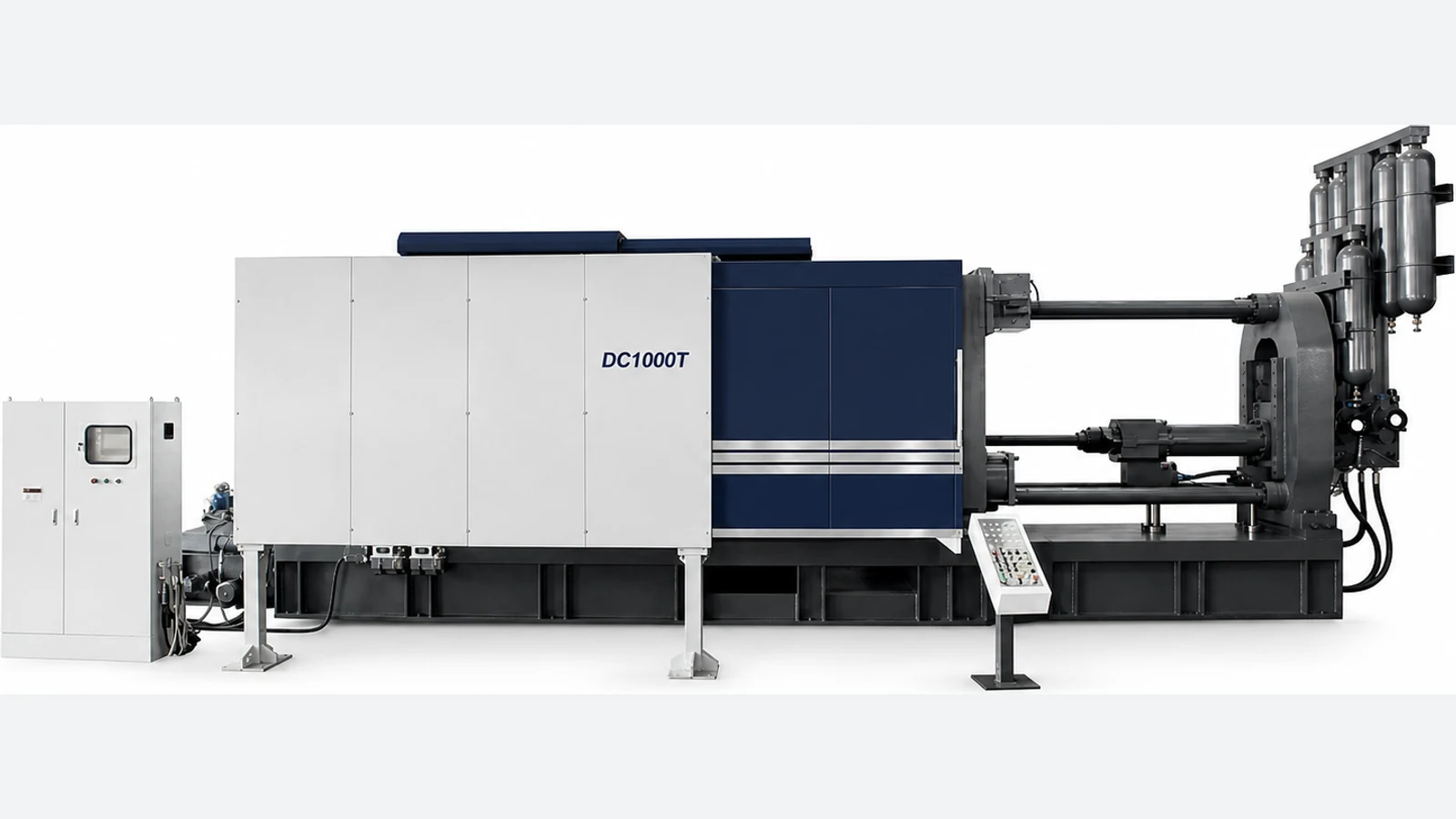
The DC1000T is a 10,000 kN cold chamber platform for large aluminum and magnesium projects. Treat it as a complete capital-equipment package: approve the machine only after clamp demand, complete shot, die interfaces, process window, automation, factory services, delivery, and acceptance evidence agree in one controlled technical specification.
Published DC1000T data reviewed August 10, 2026 by Cathy, Director. Approved project drawings and the signed technical agreement govern the final supply.
Capital approval memo
The DC1000T belongs on the shortlist only when one traceable engineering file clears six independent boundaries. Purchasing can then compare quotations against the same approved assumptions instead of comparing incomplete base-machine prices.
Record total pressure-exposed projected area, cavity-pressure basis, alloy, slide effects, quality risk, and operating margin. The result must stay within 10,000 kN.
Include castings, runners, biscuit, overflows, and allowance. Select one plunger only when both metal capacity and required intensification pressure pass.
Verify die width, height, 450-1,150 mm thickness, weight, mounting, opening, ejection, slides, cooling, vacuum, lifting, and changeover route.
Freeze furnace, dosing, spray, extraction, trim, conveyors, inspection, scrap, guarding, I/O, recipes, traceability, and recovery sequences.
Approve access, lifting, floor and foundation, electrical supply, cooling water, air, exhaust, oil-temperature control, service zones, and local safety rules.
Define FAT, SAT, sample conditions, measurement methods, pass criteria, documents, training, backups, spares, warranty, and response obligations.
Schedule B / Shot-end selection
The largest plunger is not automatically the safest option. A larger diameter increases the published metal allowance while reducing intensification pressure. Screen the actual complete shot and process-pressure requirement together, then lock the sleeve, plunger, injection position, flange, cooling, lubrication, and spare set into the technical agreement.
Highest published intensification pressure and the lowest complete-shot allowance.
Higher pressure option with more metal allowance than the 90 mm package.
Capacity-led middle option; verify the reduced pressure against the process requirement.
Largest published shot allowance and the lowest listed intensification pressure.
Schedule C / Published model data
Use these values for initial screening and RFQ normalization. Require approved datums, tolerances, interface drawings, component schedules, utility data, and installation drawings before technical release.
Source: current manufacturer-published DC1000T product data, reviewed August 10, 2026 by Cathy, Director | *Confirm injection-position datums and usable positions on the project drawing | Final signed technical agreement takes precedence.
Published manufacturer reference: ShiMi DC1000T Standard Cold Chamber Die Casting Machine. Use this public record to cross-check the web summary; approved supplier drawings and the signed technical agreement govern the final configuration.
Schedule D / System evidence
These references have been cleaned of Chinese and brand text. They indicate component families and service areas; they do not guarantee that every visible make, quantity, arrangement, or color is included in a quotation.
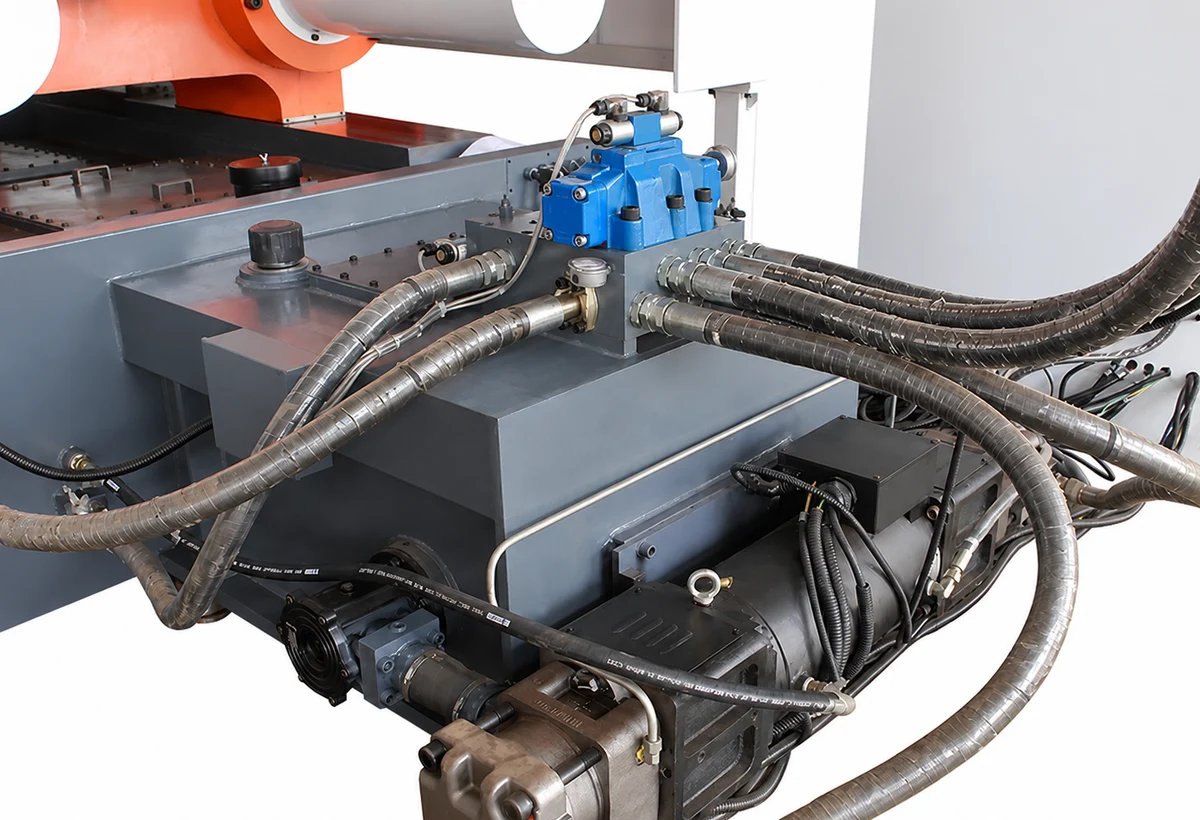
Use this reference to agree component makes, circuit ownership, filtration, oil specification, cooling duty, hose and seal spares, diagnostic points, safe isolation, access zones, and the maintenance documentation supplied with the machine.
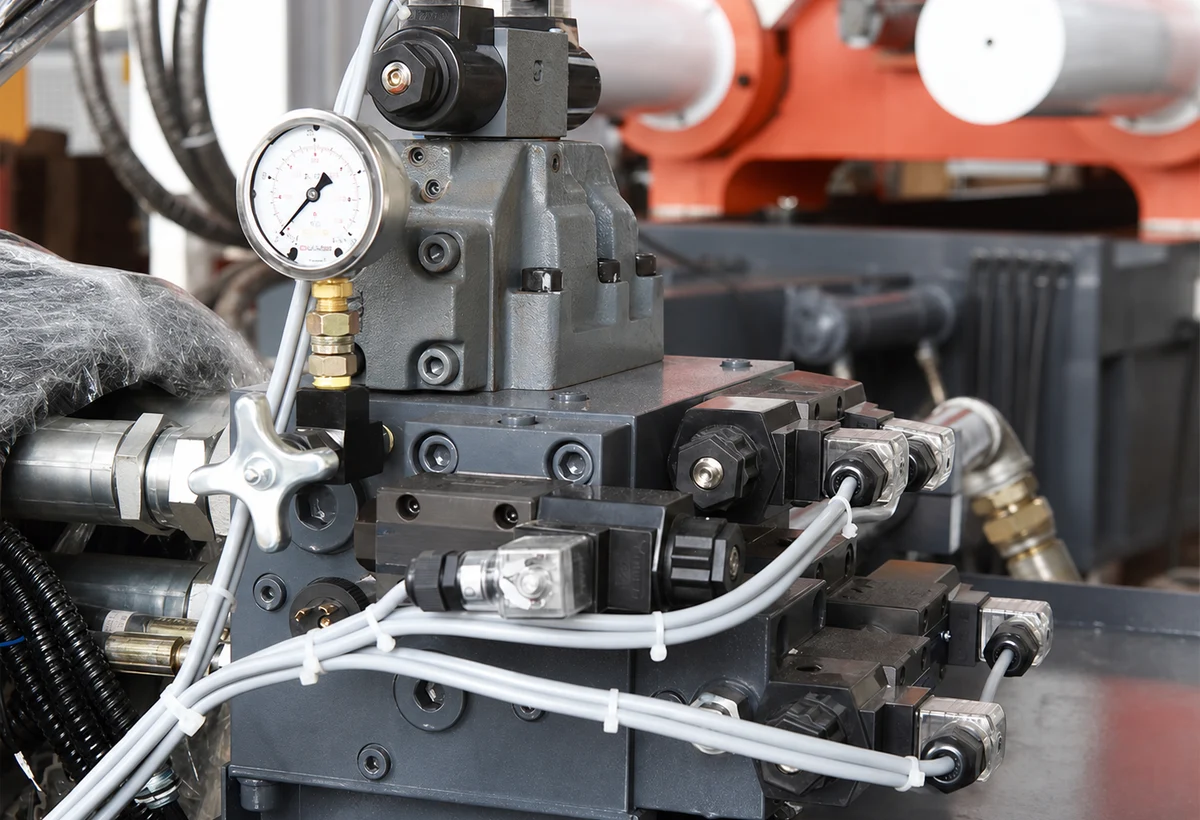
The technical agreement should identify calibration points, pressure and speed verification, accumulator discharge procedure, repeatability evidence, alarm tests, replacement parts, and the exact acceptance method used during FAT and SAT.
Schedule E / Site and logistics
The published 10 x 3.3 x 3.7 m envelope covers the base machine, not the complete cell. Peripherals, platforms, guarding, piping, maintenance access, die handling, and hot-metal safety zones expand the installed footprint.
Confirm shipping split, packed dimensions and weights, center of gravity, lifting points, port and inland restrictions, unloading equipment, crane capacity, hook height, rigging plan, doorway and aisle clearances, floor transitions, and positioning responsibility.
Approve floor loading, pits, anchoring, leveling, grout, drainage, oil containment, vibration considerations, die-change route, crane coverage, platen and tie-bar service, accumulator access, panel clearance, and safe escape paths from final drawings.
State voltage, frequency, transformer and cable boundary, connected and operating demand, cooling-water flow and quality, compressed air, oil-temperature control, furnace energy, exhaust, network, every point of supply, and responsibility for local distribution.
Define applicable standards, risk-assessment ownership, guarding and interlocks, emergency zones, platforms, stairs, lockout points, hot-metal hazards, labels and language, operator visibility, validation records, environmental obligations, and site permits.
Schedule F / Responsibility matrix
Ask each supplier to answer the same line items with Included, Optional, By Buyer, or Excluded, plus a technical reference and price effect. This exposes interface gaps early and keeps the commercial comparison tied to an executable project.
Controls, hydraulics, lubrication, core pulls, cooling interfaces, guarding, die protection, selected sleeve and plunger, injection positions, options, component makes, coatings, oil charge, and every exclusion.
Furnace, dosing, spray, extraction, quench, trim, conveyors, scrap, marking, inspection, vacuum, thermal control, grippers, fixtures, safety integration, recipes, I/O, data, and cycle ownership.
Incoterm, packing, insurance, shipment, unloading, positioning, foundation information, piping, cabling, installation, commissioning, sample material, production support, local labor, permits, and utilities.
Drawings, manuals, certificates, risk files, software and backups, FAT and SAT records, training, translated documents, included and recommended spares, warranty start, remote support, service response, and escalation route.
Define the casting, die, alloy, sample quantity, cycle basis, quality checks, measuring equipment, machine settings, environmental conditions, repeatability evidence, capability requirement, pass criteria, open-action process, retest rules, and who pays when prerequisites are missing.
Schedule G / Buyer FAQ
Use these direct answers for early screening. Put the project-specific calculations, drawings, tolerances, owners, test conditions, and evidence into the signed agreement.
The DC1000T is an initial candidate for large aluminum or magnesium projects whose verified clamp demand, complete shot, die envelope, required process pressure, automation, and factory interfaces fit the published 10,000 kN platform and one confirmed 90, 100, 110, or 120 mm shot package. Nominal tonnage alone does not approve a part.
Published data lists 10,000 kN clamping force, 800 mm clamping stroke, 500 kN ejecting force, 200 mm ejection stroke, 450-1,150 mm die thickness, 1,620 x 1,620 mm platens, 1,030 x 1,030 mm tie-bar spacing, 805 kN injection force, 850 mm injection stroke, a 45 kW motor, 1,500 L oil tank, and approximate 70 ton machine weight.
Check complete shot and required intensification pressure together. Published aluminum allowances rise from 10 to 18 kg as plunger diameter increases, while listed intensification pressure falls from 126 to 71 MPa. Select the smallest package that clears complete shot while preserving the documented pressure window and process margin.
Total the projected area of every cavity, runner, overflow, biscuit influence, and pressure-exposed slide, multiply by the agreed cavity-pressure assumption, then apply the documented operating margin. Check the result against 10,000 kN separately from the shot package, die fit, and the published 2,500 cm2 maximum casting area.
Approve the transport route, unloading and lifting plan, foundation and anchoring, 70 ton machine load, 10 x 3.3 x 3.7 m bare-machine envelope, die-change route, service clearances, electrical supply, cooling water, compressed air, exhaust, oil-temperature control, safety standard, and all peripheral footprints from final drawings.
Require a line-by-line supply boundary, selected shot end, controls and hydraulic makes, core pulls, cooling and vacuum interfaces, furnace and automation ownership, utilities, guarding, drawings, manuals, backups, spares, packing, commissioning, training, warranty, and exclusions. FAT and SAT should define test conditions, measurements, records, pass criteria, open-action ownership, and retest rules.
DC1000T controlled inquiry
A useful proposal should return a stated model-fit decision, selected shot package, interface register, preliminary cell layout, acceptance path, commercial boundary, and list of unresolved assumptions.
Casting and process Alloy, drawings, projected area, cavity-pressure basis, cavities, net weight, runners, biscuit, overflows, complete shot, fill, quality, inspection, and traceability.
Die and movement Size, thickness, weight, mounting, opening, ejection, slides, core pulls, cooling, vacuum, lifting, storage, and changeover method.
Cell and performance Cycle, annual volume, shifts, OEE basis, furnace, dosing, spray, extraction, quench, trim, inspection, scrap, guarding, data, and recovery.
Factory and delivery Layout, route, floor, crane, utilities, safety standard, destination, Incoterm, FAT, SAT, documents, installation, training, warranty, and spares.