0140 mmplunger
- Aluminum
- 0.60 kg
- Magnesium
- 0.40 kg
- Pressure
- 202 MPa
- Casting area
- 85 cm²
Highest listed pressure and the smallest metal allowance.

DC180T / Compact cold chamber platform
The DC180T is the compact entry point in this aluminum and magnesium cold chamber range. Its 1,800 kN clamp, three pressure-capacity packages, 486 × 486 mm die window, and small footprint make it a practical shortlist only when the actual casting, die, process, and cell all clear the published boundaries.
Published DC180T screening data reviewed August 9, 2026 by Cathy, Director. Final signed technical documents take precedence.
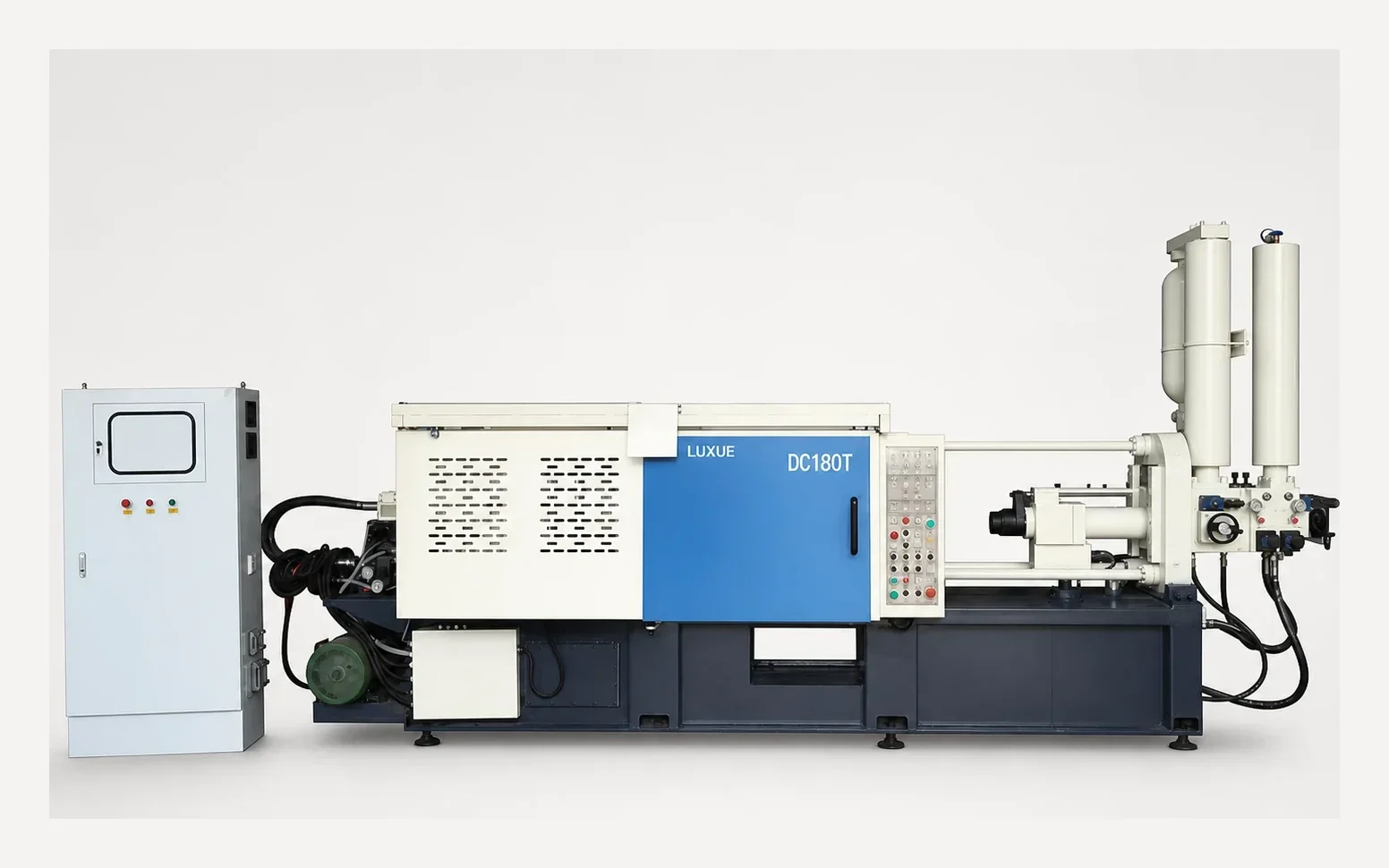
Four independent fit limits
A nominal 180 ton label cannot prove suitability. The project must pass clamp demand, complete shot, die envelope, and cell integration as separate checks using the same approved part and process assumptions.
Shortlist the DC180T when the projected-area calculation stays within 1,800 kN with the agreed margin, the complete metal demand fits one confirmed shot package, the die clears 486 × 486 mm and 200–520 mm, and the required process and automation interfaces can be documented.
Total every cavity, runner, overflow, and pressure-exposed slide. State cavity pressure and the operating margin instead of inferring clamp from part weight.
Include cavities, runners, biscuit, overflows, and process allowance. Compare the total with aluminum or magnesium capacity at the required pressure.
Check width, height, thickness, weight, mounting, opening, ejection, core pulls, lifting route, water connections, and service clearance.
Define furnace and dosing, spraying, extraction, trimming, guarding, utilities, floor loading, operator access, documents, and acceptance evidence.
Pressure-capacity selector
The 40, 50, and 60 mm packages are linked combinations. More shot capacity is accompanied by lower published intensification pressure, so purchasing should not request the largest diameter by default.
Separate clamp check: the published maximum casting area is 430 cm², but that is not an unconditional part-size approval. Actual allowable area depends on geometry, cavity pressure, alloy, quality target, and margin.
Highest listed pressure and the smallest metal allowance.
Middle package for a balanced capacity-pressure window.
Largest listed shot allowance and the lowest listed pressure.
DC180T engineering sheet
Use these published values for initial model comparison and RFQ preparation. Confirm datums, tolerances, component makes, interfaces, options, and installation drawings in the signed technical agreement.
Technical reference: current published DC180T product data, reviewed August 9, 2026 by Cathy, Director | *Confirm injection-position datum and usable travel on the approved drawing | Final signed technical agreement takes precedence.
Published manufacturer reference: ShiMi DC180T Standard Cold Chamber Die Casting Machine. Use this public record to cross-check the web summary; approved supplier drawings and the signed technical agreement govern the final configuration.
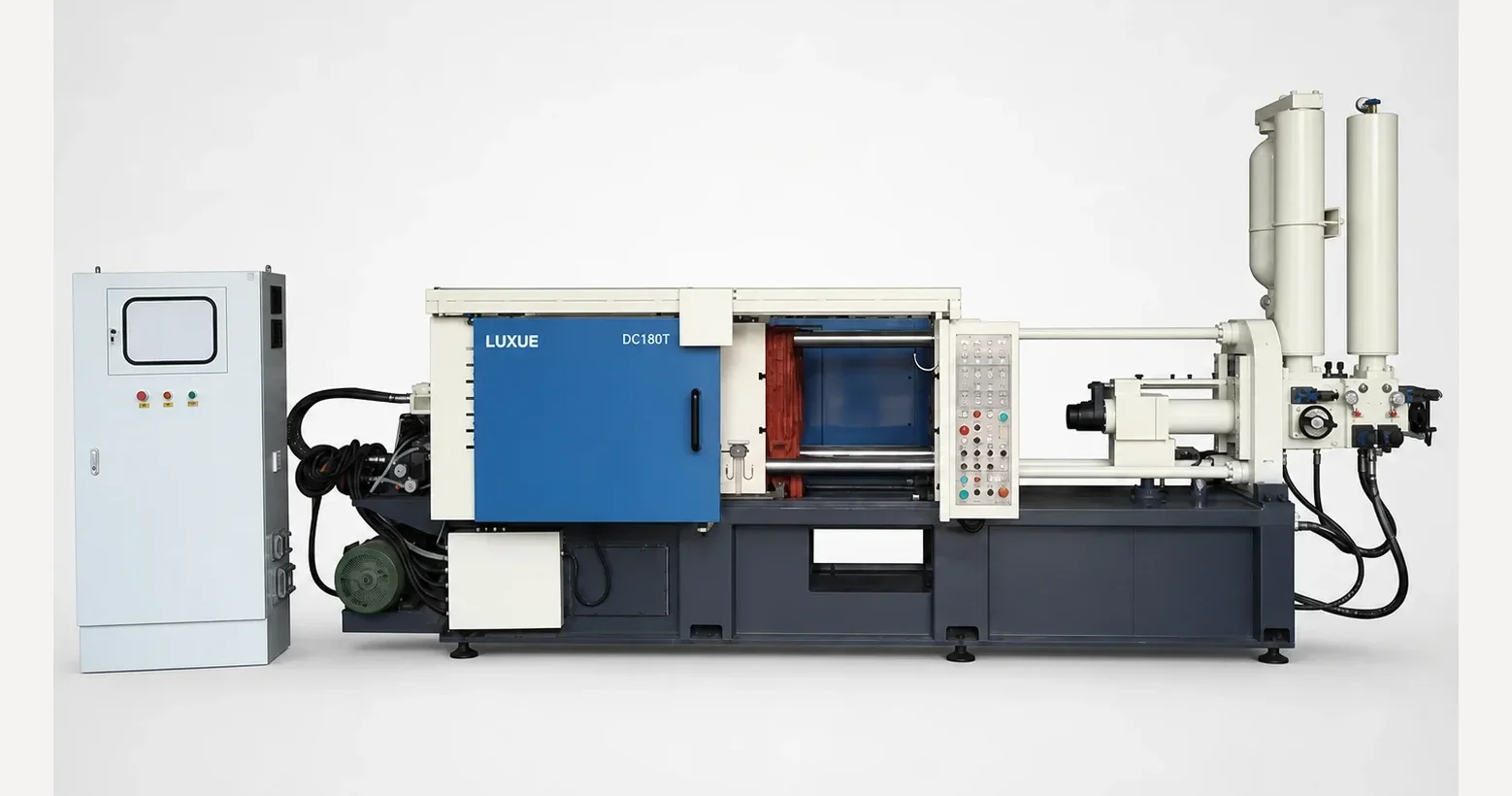
Die change and service access
The compact footprint helps only when people, dies, hoses, lifting equipment, and automation can still reach the areas they need. Put these checks into the layout review before the purchase order.
Compact machine, complete project
A comparable quotation must state where the base machine stops and every supplier responsibility begins. Unlisted peripherals, interfaces, test evidence, and installation work should not be assumed.
Read the machine RFQ checklist →Alloy, holding or melting capacity, temperature control, ladler or dosing method, transfer height, loss assumptions, and safety interface.
Cooling, die temperature, vacuum, spray, core pulls, selected shot package, recipes, traceability, inspection, and reject rules.
Robot or extractor, gripper, part confirmation, conveyor, quench, trim, scrap handling, marking, and changeover tooling.
Voltage, cooling water, air, floor loading, access, guarding, FAT, drawings, manuals, backups, training, spares, packing, and commissioning.
DC180T buyer FAQ
These answers help process, tooling, maintenance, plant, and purchasing teams review the same project evidence before technical approval.
The DC180T is an initial candidate for compact aluminum or magnesium castings whose total projected-area calculation, complete shot demand, die envelope, and required pressure fit the listed 1,800 kN clamp and a confirmed 40, 50, or 60 mm plunger package. The nominal 180 ton class alone does not approve a part.
Published data lists 1,800 kN clamping force, 350 mm clamping stroke, 110 kN ejecting force, 85 mm ejection stroke, 200-520 mm die thickness, 720 x 720 mm platens, 486 x 486 mm tie-bar spacing, 255 kN injection force, 340 mm injection stroke, a 15 kW motor, and an approximate machine weight of 6.5 tons.
Compare the complete metal demand and required intensification pressure together. Published aluminum capacities rise from 0.60 to 1.30 kg as plunger diameter increases, while listed pressure falls from 202 to 90 MPa. The largest package is therefore not automatically the correct package.
Calculate every cavity, runner, overflow, and pressure-exposed slide in the projected area, multiply by the documented cavity-pressure assumption, and apply the agreed operating margin. Check that result against 1,800 kN separately from shot weight, maximum published casting area, and die fit.
Move up when a documented constraint crosses the DC180T boundary: clamp demand, complete shot, required pressure, the 486 x 486 mm tie-bar opening, 520 mm maximum die thickness, opening or ejection travel, die handling, automation reach, or maintenance clearance. Do not move up on tonnage preference alone.
Send the alloy, part drawing, net part and complete shot weight, projected area, cavities, die dimensions and weight, pressure and quality assumptions, cycle and annual output, furnace and automation plan, voltage, utilities, safety standard, destination, documentation, FAT, spares, and training requirements.
DC180T fit and scope request
A useful response can then state whether the compact platform fits, which plunger package is being reviewed, what the quotation includes, and which technical or commercial items remain open.
Alloy, drawing, projected area, complete shot, cavities, pressure and quality target.
Dimensions, weight, thickness, mounting, opening, ejection, core pulls and cooling.
Cycle, annual volume, shifts, automation, trimming, inspection and changeover.
Layout, utilities, voltage, safety, destination, FAT, documents, training and spares.