Q01Which die casting machine is used for LED lighting housings and heat sinks?
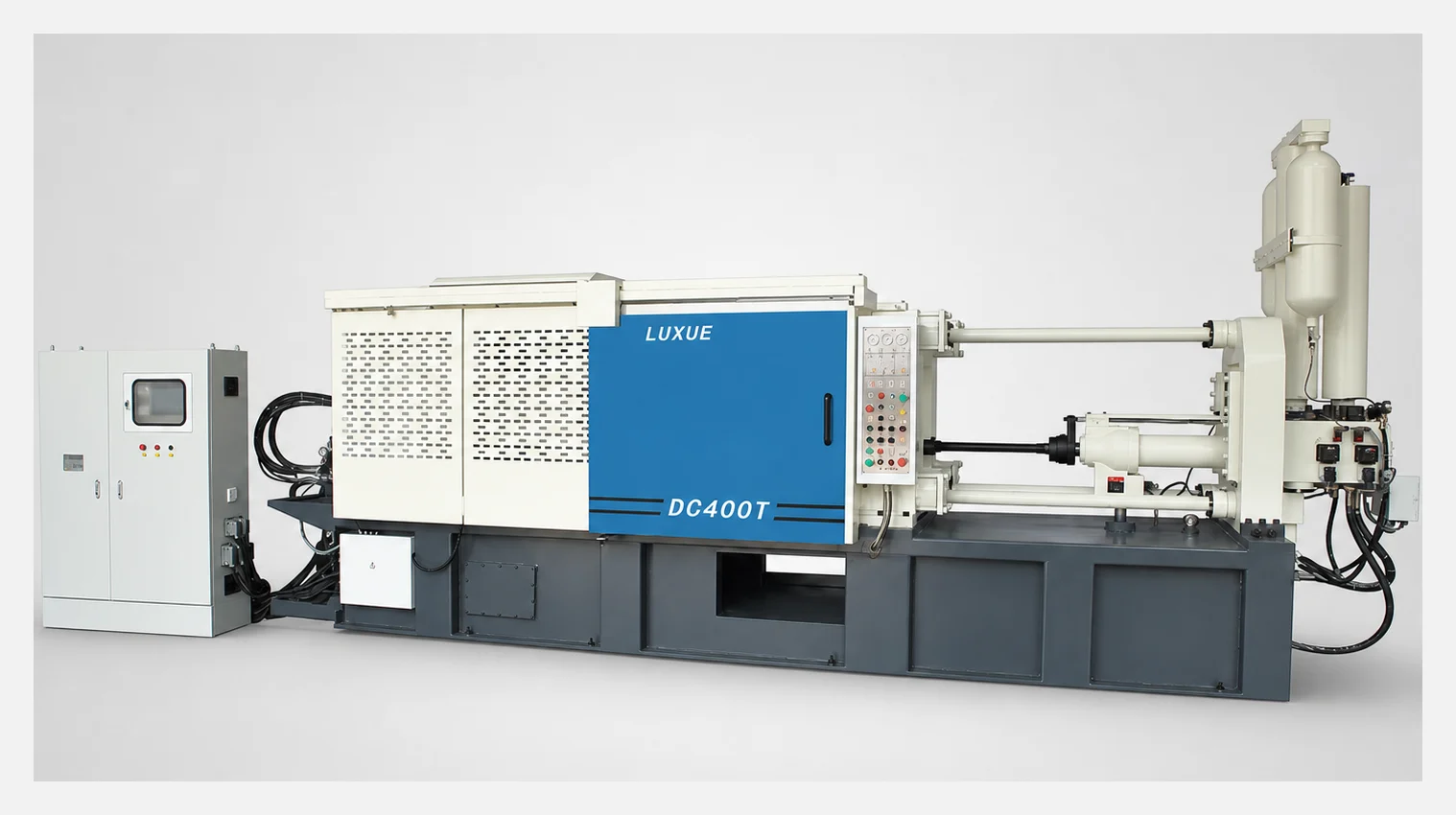
Aluminum LED housings and heat sinks normally begin with a cold chamber machine review. Select the model from total projected area and the approved pressure basis, complete shot demand, die envelope, injection duty, thin-fin filling risk, die thermal control, extraction and handling, output, quality plan, and plant interfaces.
Q02Does heat-sink weight determine machine tonnage?
No. Weight contributes to shot demand, but clamping force is primarily screened from total projected area and the approved cavity-pressure basis. Deep fins, a large plan area, multiple cavities, runners, slides, and the die envelope can make a relatively light part require a different machine than weight alone suggests.
Q03What information is needed to review a lighting housing project?
Provide the 2D or 3D drawing, alloy, casting and runner weight, projected area, critical walls and fins, cavities, die size and weight, PCB and thermal contact surfaces, sealing boundary, mounting loads, finish, annual volume, cycle target, automation, quality plan, and plant data. Include the thermal and ingress requirements controlled at luminaire level.
Q04Can die casting produce thin and deep heat-sink fins?
Potentially, but feasibility depends on alloy, fin thickness, height, spacing, flow length, draft, gating, venting or vacuum, die temperature, injection profile, ejection, and handling. Treat the drawing as a review input, not proof of castability. Use simulation, die review, and representative trials to release the geometry and process.
Q05Does a die-cast housing guarantee LED thermal performance?
No. Thermal performance belongs to the complete path from LED junction through the PCB, interface material, housing base, fins, and surrounding environment. Alloy, contact flatness, coating, assembly pressure, orientation, airflow, ambient temperature, and contamination all affect the result. Validate the complete luminaire under its specified operating conditions.
Q06Does the casting itself have an IP rating?
No. Ingress-protection performance applies to the tested enclosure or luminaire assembly, including joints, gaskets, lenses, connectors, vents, fasteners, surface condition, and assembly process. The casting supports the sealing design, but the finished assembly and test specification control the rating.
Q07How should surface finish be included in the RFQ?
State visible class, color, texture, coating system, pretreatment, corrosion environment, adhesion and thickness requirements, masking zones, thermal-contact exclusions, allowable parting line and flash, sample standard, handling protection, and test method. Coating can affect dimensions, sealing, electrical grounding, and thermal interfaces.
Q08What should buyers compare in machine quotations for lighting parts?
Compare the same clamp and pressure basis, shot package, die limits, injection and thermal-control scope, vacuum if required, extraction and fin protection, automation, cycle basis, inspection and trials, utilities, safety, documentation, spares, service, installation, warranty, and exclusions. Require every assumption to be visible.