0150 mm
1.57 kg1.10 kg162 MPa182 cm²Highest listed pressure; lowest metal capacity.

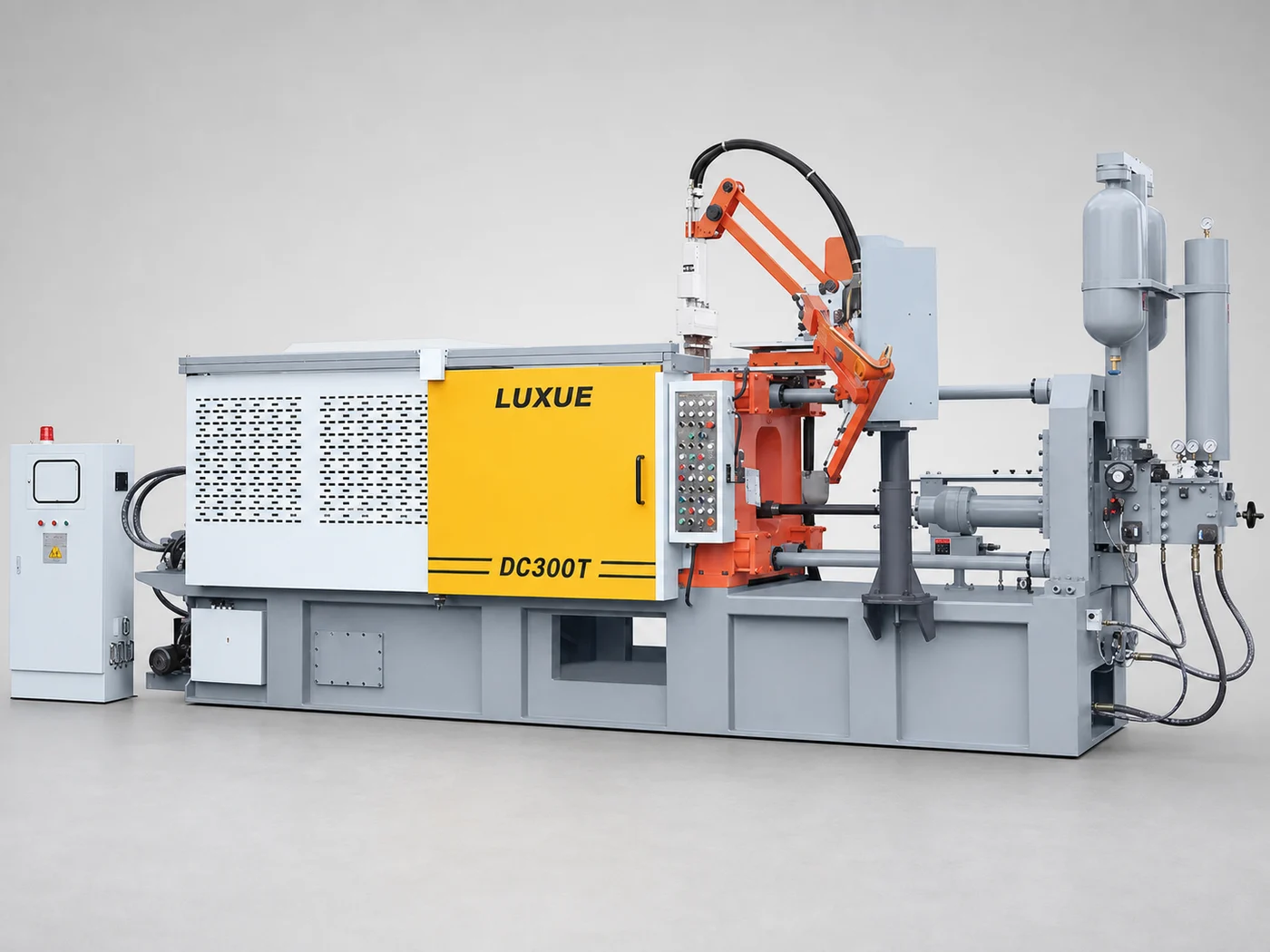
DC300T / Production-cell planning platform
The DC300T combines a listed 3,000 kN clamp with three shot-end choices for aluminum and magnesium work. Approve it only after the projected area, complete shot, die envelope, required pressure, automation, utilities, and acceptance scope have been reviewed as one production system.
Published DC300T data reviewed August 9, 2026 by Cathy, Director. Final signed technical documents take precedence.
Start with the production mission
The model is a defensible shortlist only when five independent checks pass. Do not use aluminum part weight as a substitute for projected area, die geometry, or process pressure.
Consider the DC300T when the calculated clamp demand stays within 3,000 kN with the agreed margin, the complete metal demand fits one pressure-capacity package, the die clears the 580 x 580 mm opening and 250-700 mm thickness range, and the required cell interfaces can be documented.
Total every pressure-exposed projected area, including runners, overflows, and applicable slides. State the cavity-pressure assumption and margin.
Include all cavities, runners, biscuit, overflows, and process allowance. Check aluminum or magnesium mass against the selected plunger package.
Verify width, height, thickness, weight, opening, mounting, ejection, core pulls, lifting route, cooling, and maintenance access.
Match fill profile, intensification pressure, plunger, shot sleeve, injection position, thermal control, vacuum, and quality target.
Define furnace, ladler, sprayer, extractor, trimming, conveyors, guarding, utilities, floor plan, safety, documentation, and service boundary.
Pressure-capacity tradeoff
The published packages link plunger diameter, metal capacity, intensification pressure, and casting area. Select the smallest package that satisfies the complete shot and required pressure with an agreed process margin.
Highest listed pressure; lowest metal capacity.
Middle package for balanced capacity and pressure.
Highest listed shot capacity; lowest listed pressure.
Do not confuse maximum casting area with automatic approval: the published maximum is 780 cm². Actual allowable projected area depends on cavity pressure, geometry, alloy, quality requirement, and the operating margin accepted for the project.
Engineering data ledger
These values support initial comparison and RFQ preparation. Confirm dimensions, datums, component makes, interfaces, options, and tolerances in the quotation and approved drawings.
Technical reference: current published DC300T product data, reviewed August 9, 2026 by Cathy, Director | *Confirm the injection-position datum and usable range in the project drawing | Final signed technical agreement takes precedence.
Published manufacturer reference: ShiMi DC300T Standard Cold Chamber Die Casting Machine. Use this public record to cross-check the web summary; approved supplier drawings and the signed technical agreement govern the final configuration.
Machine-zone review
These are crops from the cleaned DC300T configuration reference, not separate machines. They help teams discuss interfaces and access without implying that every shown component is included.
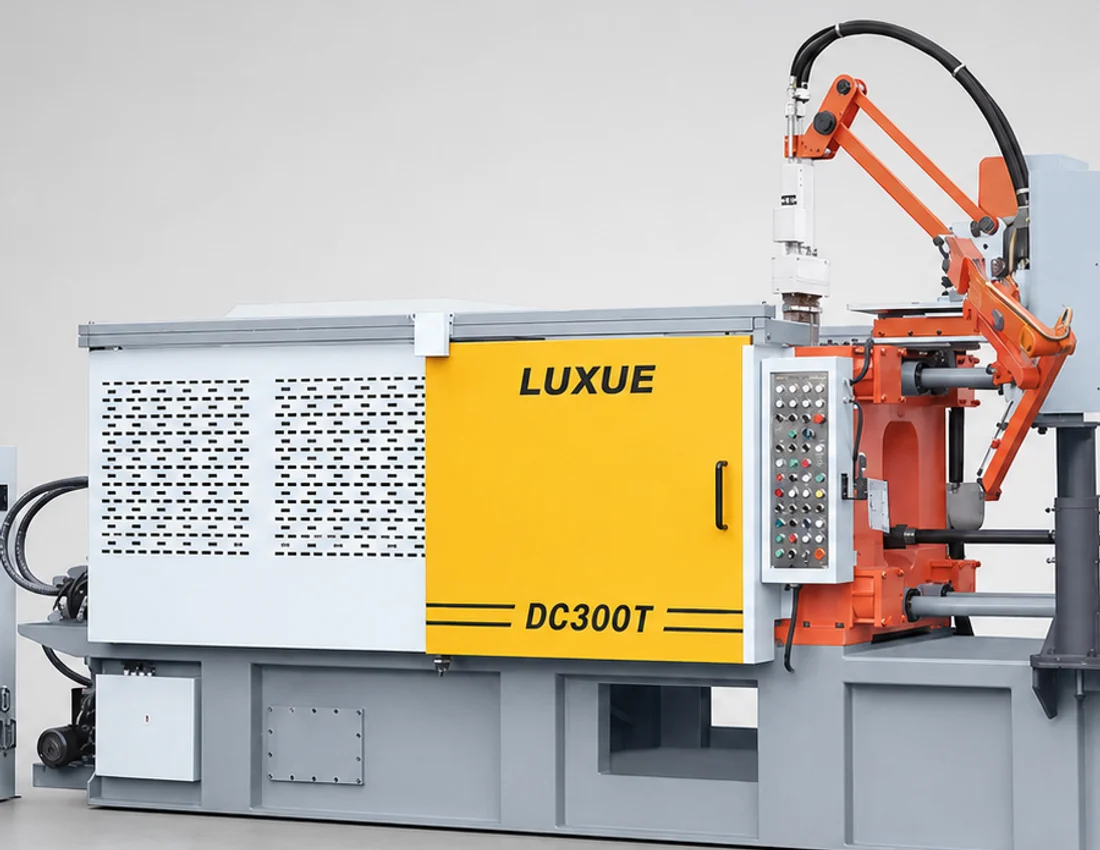
Confirm platen access, die-change clearance, moving and fixed-side services, extractor or robot interface, guarding boundary, maintenance doors, and the sequence included in the control program.
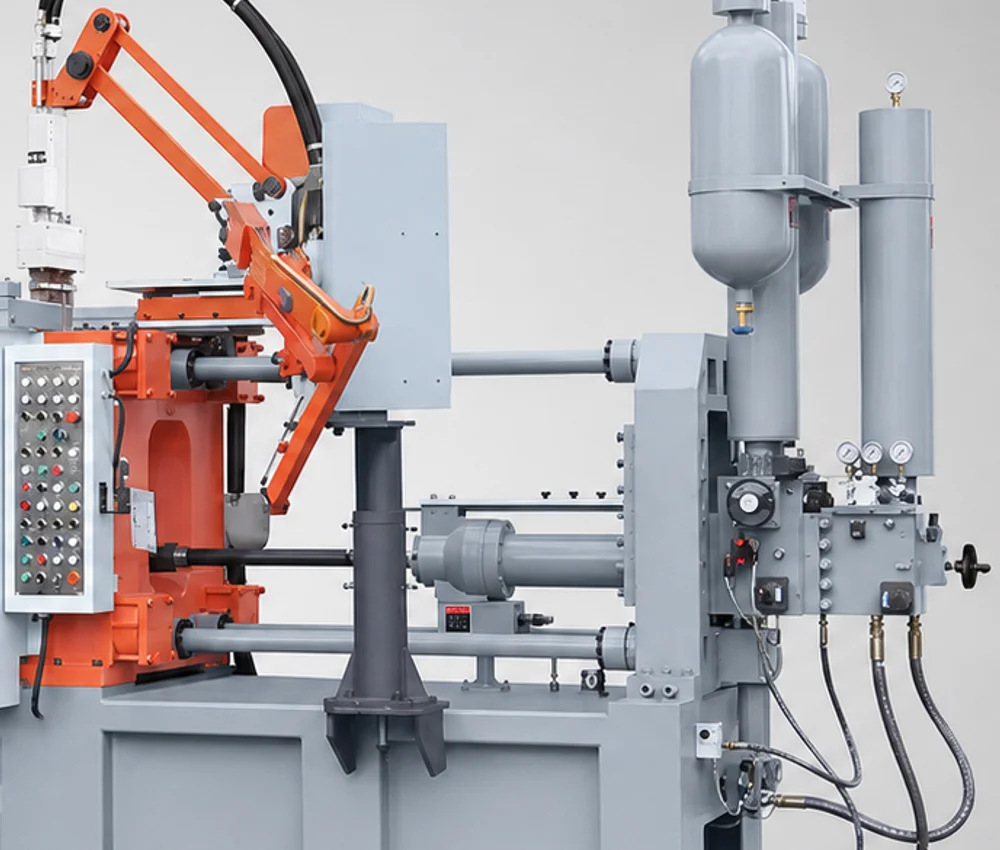
Specify the plunger and shot-sleeve package, injection positions, accumulator inspection method, pressure gauges, hydraulic brands, safe discharge procedure, service clearance, and recommended critical spares.
Complete cell boundary
A comparable quotation must define molten-metal handling, die services, automation, downstream equipment, safety, utilities, documentation, and commissioning responsibilities around the DC300T.
Read the machine RFQ checklist ->Holding or melting capacity, energy source, temperature control, ladler or dosing method, transfer height, metal-loss assumptions, and safety interfaces.
Cooling circuits, die-temperature control, vacuum, spray, core pulls, ejector interface, die clamps, lifting, changeover method, and leak testing.
Robot or extractor reach, gripper, part confirmation, conveyor, quench, trim press, scrap handling, marking, inspection, and reject routing.
Voltage and frequency, cooling water, compressed air, exhaust, floor load, access route, guarding, safety standard, language, manuals, and training.
Factory acceptance plan
A useful FAT is agreed before shipment and records what was checked, by whom, with which instruments, limits, files, and corrective-action rules.
Interlocks, emergency stops, guards, pressure release, alarms, access, labels, and electrical protection.
Dry-cycle sequence, clamping and opening stages, low-pressure die protection, ejection, lubrication, and core-pull logic.
Slow and fast stages, pressure build, repeatability evidence, selected shot package, positions, recipes, and trace data.
Automation I/O, furnace and ladler signals, sprayer and extractor sequence, utilities, data access, and fault recovery.
Approved drawings, electrical and hydraulic diagrams, parts list, manuals, certificates, backups, and spare-parts schedule.
Included equipment, loose items, preservation, packing, lifting points, installation duties, commissioning, training, and exclusions.
DC300T procurement FAQ
Use these answers to align purchasing, process, tooling, maintenance, and plant teams before the technical agreement is signed.
The DC300T is an initial candidate for aluminum or magnesium projects whose total projected-area calculation, complete metal demand, die envelope, and process pressure fit the listed 3,000 kN clamp and a confirmed 50, 60, or 70 mm plunger package. It should be selected from the actual casting and die data rather than the 300 ton label alone.
Current published data lists 3,000 kN clamping force, 460 mm clamping stroke, 220 kN ejecting force, 105 mm ejection stroke, 250-700 mm die thickness, 900 x 900 mm platens, 580 x 580 mm tie-bar spacing, 370 kN injection force, 430 mm injection stroke, a 22 kW motor, and an approximate 11.5 ton machine weight.
Compare complete shot weight and required intensification pressure together. The published 50, 60, and 70 mm packages increase aluminum capacity from 1.57 to 3.00 kg while listed intensification pressure decreases from 162 to 83 MPa. The largest plunger is therefore not automatically the safest process choice.
Calculate the projected area of every cavity, runner, overflow, and pressure-exposed slide, multiply it by the documented cavity-pressure assumption, and apply the required operating margin. Check that result against 3,000 kN separately from shot weight, die fit, and maximum published casting area.
Compare the DC238T when it satisfies the same project with sufficient margin and a smaller footprint. Review the DC400T or DC550T when clamp demand, complete shot, die opening, platen area, die handling, automation, or maintenance clearance exceeds a documented DC300T boundary.
The quotation should identify the selected shot package, controls, hydraulic components, core-pull groups, die interfaces, furnace and dosing equipment, extraction and spraying automation, guarding, utilities, spares, documentation, packing, destination, and exclusions. The FAT plan should define safety checks, dry-cycle operation, pressure and speed verification, alarms, recipes, interfaces, and the evidence supplied with the machine.
DC300T technical and commercial inquiry
The fastest useful response starts with the evidence required to evaluate clamp demand, shot package, die fit, process window, cell interfaces, factory conditions, and commercial boundaries together.
Casting and process Alloy, drawing, projected area, complete shot, cavities, pressure assumption, quality target.
Die and movement Dimensions, thickness, weight, mounting, opening, ejection, core pulls, cooling, vacuum.
Production cell Cycle, annual volume, shifts, furnace, ladler, sprayer, extractor, trim and inspection.
Factory and delivery Layout, access, voltage, utilities, safety, destination, documentation, FAT, training and spares.