
- Clamping force
- 680 kN
- Clamping stroke
- 215 mm
- Die thickness
- 120-330 mm
- Platen size
- 565 x 500 mm
- Tie-bar spacing
- 360 x 320 mm
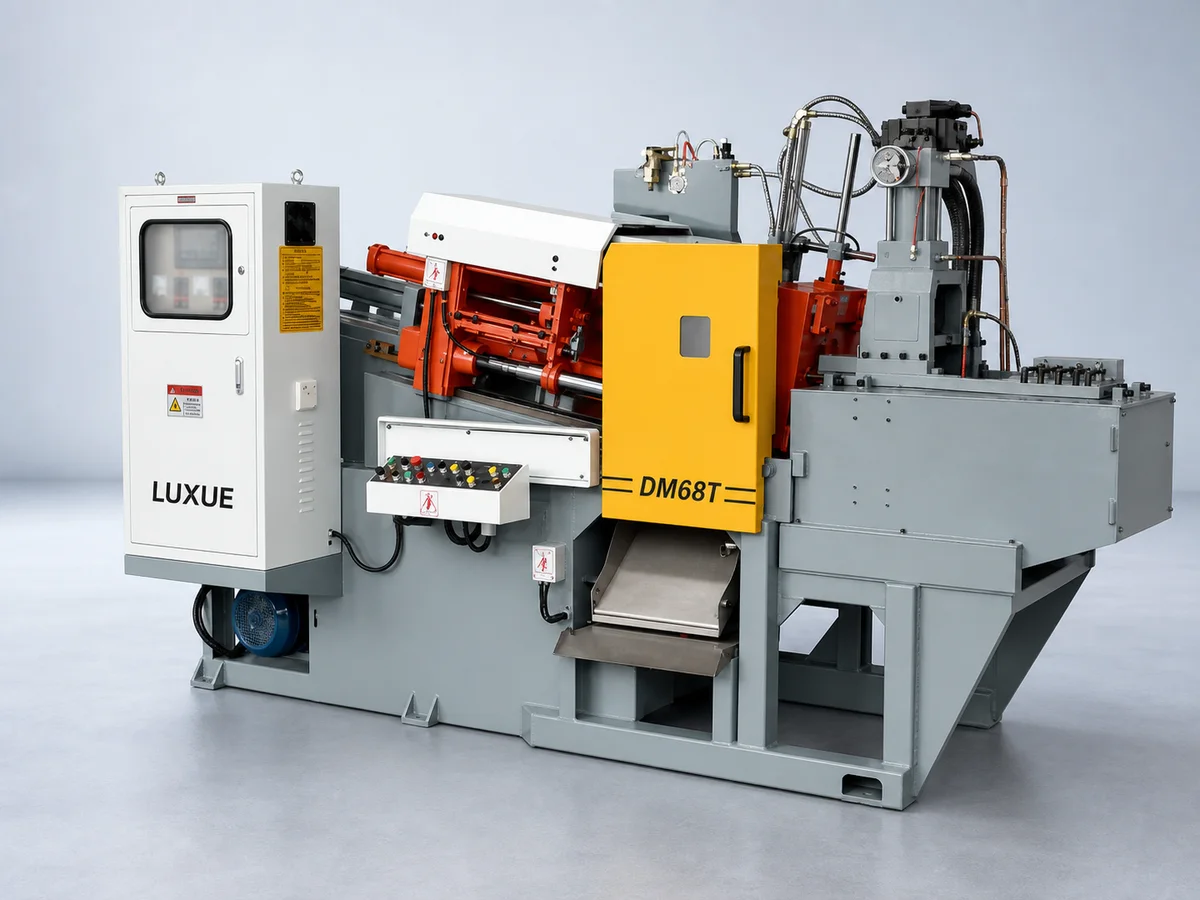
Compact range / wider die envelope
68 Ton Zinc Hot Chamber Die Casting Machine
The DM68T adds a wider clamping window and 680 kN clamping force while retaining the compact-range 0.9 kg listed zinc shot weight. It is a practical shortlist when die clearance—not only casting weight—is pushing beyond the DM50T.
01 / Clamp680 kN
02 / Tie bars360 x 320 mm
03 / Platen565 x 500 mm
Why buyers move to DM68T
The larger die window is the defining step
DM50T and DM68T list the same 0.9 kg zinc shot weight, clamp stroke, and die-thickness range. The DM68T decision is usually driven by clamp demand, tie-bar clearance, platen area, or access around the die.
Direct answer
Shortlist the DM68T when the complete die fits within the 360 x 320 mm tie-bar opening and 120-330 mm thickness range, the complete shot remains within the confirmed package, and the projected-area calculation leaves an acceptable margin below 680 kN.
Screening dimensionDM50TDM68T
Tie-bar width300 mm360 mm
Tie-bar height300 mm320 mm
Platen size455 x 455565 x 500 mm
Clamping force500 kN680 kN
Listed zinc shot0.9 kg0.9 kg
Values are brochure-derived. A larger platen does not confirm die mounting or process suitability by itself.
DM68T technical data
68 ton zinc hot chamber machine specifications
Initial screening values for procurement and die-fit review. The approved quotation and final interface documents take precedence over this web summary.
- Injection force
- 60 kN
- Injection stroke
- 110 mm
- Listed shot weight
- 0.9 kg (Zn)
- Material
- Zinc alloys
- Motor / total power
- 9 / 11.2 kW
- Approx. size
- 3.30 x 1.58 x 2.06 m*
- Model
- DM68T
- Process
- Hot chamber
Specification source: supplied hot chamber machine brochure | Last reviewed August 9, 2026 by Cathy, Director | Dimensions marked with * are approximate | Final signed quotation, layout, interfaces, and technical agreement take precedence.
Technical inspection sequence
Three DM68T areas to confirm before release
Each close-up corresponds to a quotation checkpoint. Images are configuration references and do not define the included equipment.
01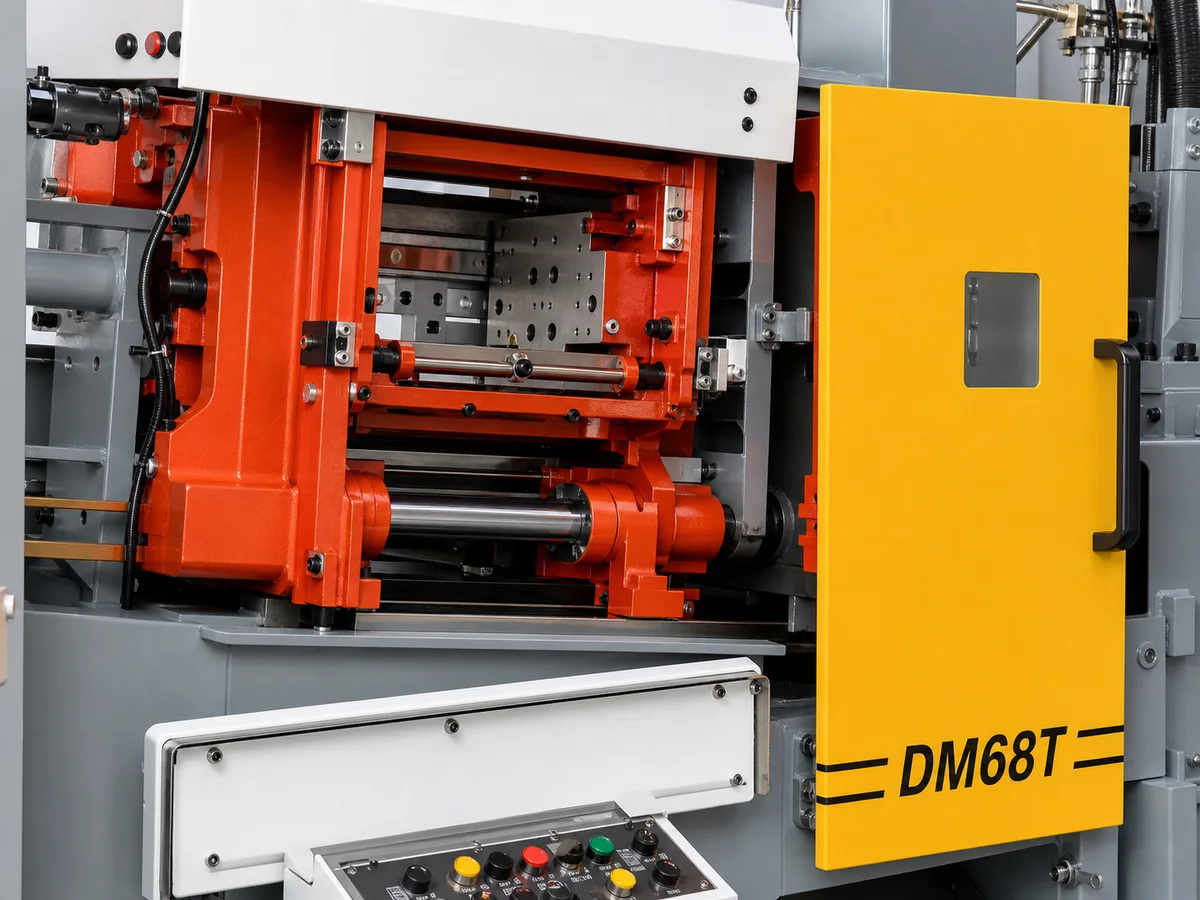
Platen, tie bars, and clamping structure
Use the 360 x 320 mm tie-bar spacing and 565 x 500 mm platen as screening limits, then confirm die mounting, ejector pattern, opening, weight support, and service access on the approved layout.
02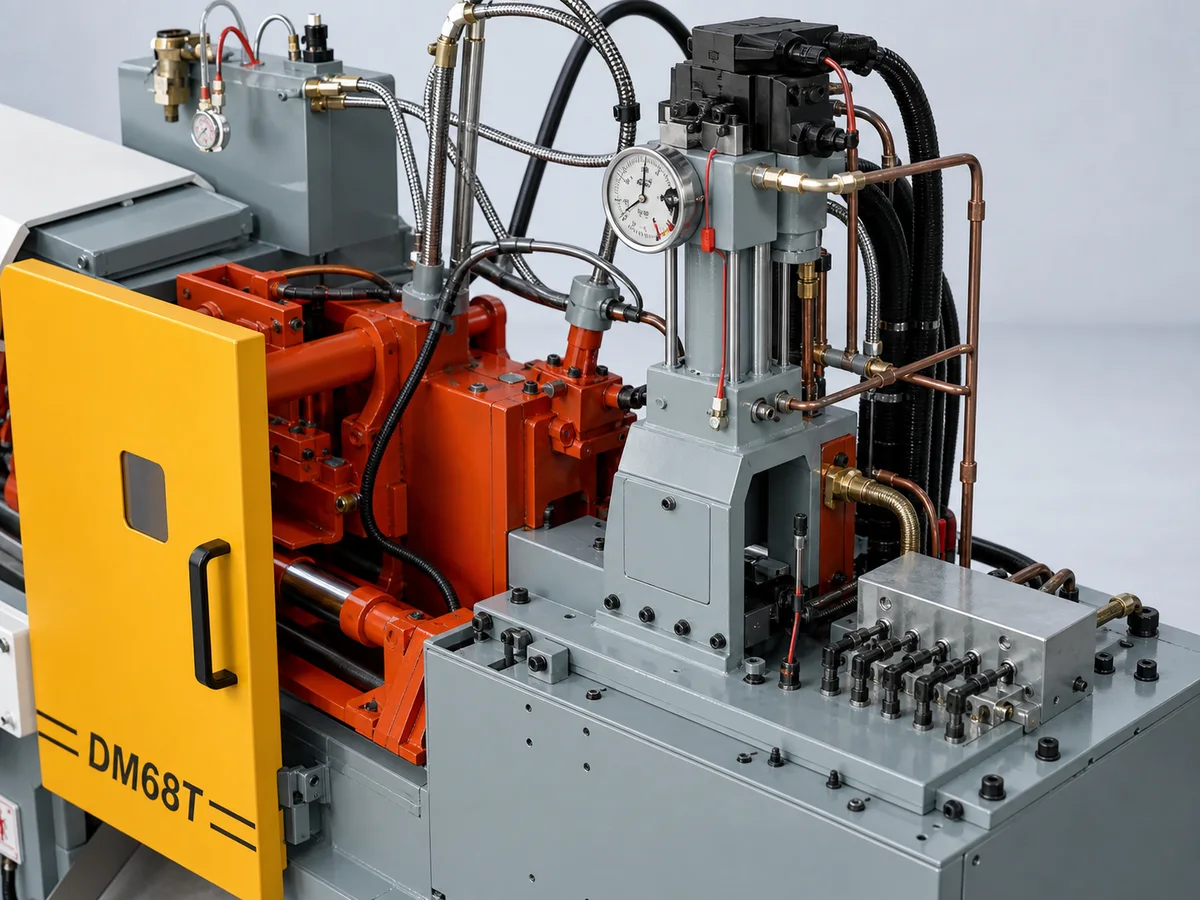
Injection hydraulics and hot-end side
Confirm the 60 kN injection configuration, pressure controls, hose and tubing routing, gooseneck and nozzle interfaces, furnace connection, guarding, and maintenance clearance.
03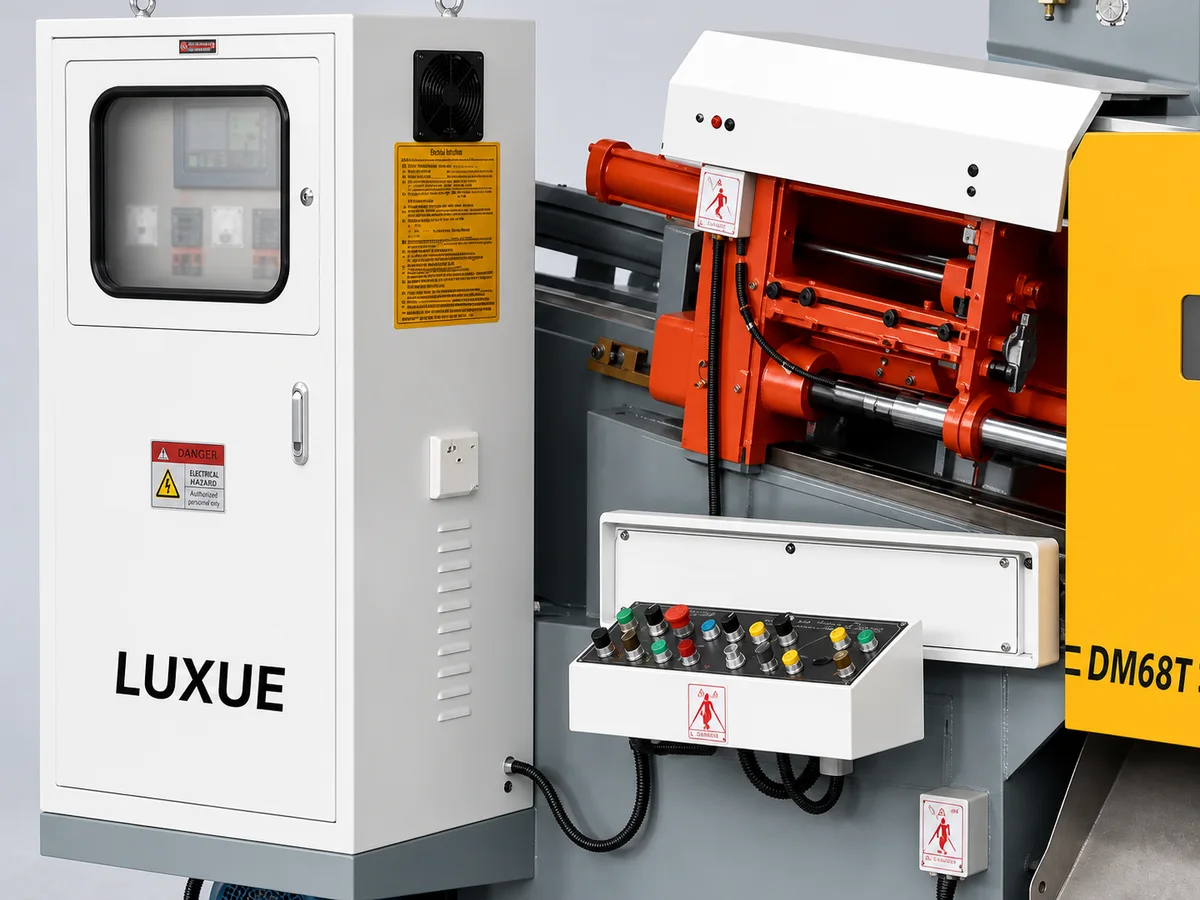
Electrical cabinet and local controls
Write controller language, voltage and frequency, cabinet cooling, safety circuit, emergency stops, automation I/O, drawings, and remote-support scope into the technical agreement.
Plan wear parts and commissioning stock with the machine: review hot chamber die casting machine parts.
Engineering release path
Four documents close the gap between shortlist and purchase
Ask for a quotation package that records both technical assumptions and commercial boundaries.
Use the machine RFQ checklist ->- 01Part and shot worksheet
Alloy, net part, runners, overflows, cavities, projected area, and cavity pressure assumption.
- 02Die and interface drawing
Envelope, weight, mounting, ejector, opening, furnace side, gooseneck, nozzle, and access.
- 03Cell and utility schedule
Voltage, cooling, extraction, guarding, automation I/O, peripherals, and floor space.
- 04Signed supply boundary
Included equipment, options, spares, documents, acceptance, packing, destination terms, and exclusions.
DM68T buyer answers
Questions that affect model approval
These answers separate die-window, clamp, and shot-capacity decisions so procurement teams can ask for a technically useful quotation.
01What is the DM68T zinc die casting machine best suited for?
The DM68T is an initial candidate for zinc castings whose dies need a wider 360 x 320 mm tie-bar opening or 565 x 500 mm platen than the DM50T provides, while the complete shot demand remains within the selected 0.9 kg listed zinc package. Projected area, cavity pressure, die weight, and service clearance still require review.
02What are the main DM68T technical specifications?
The supplied brochure lists 680 kN clamping force, 215 mm clamping stroke, 120-330 mm die thickness, 565 x 500 mm platen, 360 x 320 mm tie-bar spacing, 60 kN injection force, 110 mm injection stroke, and 0.9 kg zinc shot weight.
03How does the DM68T differ from the DM50T?
The DM68T raises listed clamping force from 500 to 680 kN, tie-bar spacing from 300 x 300 to 360 x 320 mm, and platen size from 455 x 455 to 565 x 500 mm. Both list the same 0.9 kg zinc shot weight, 215 mm clamp stroke, and 120-330 mm die-thickness range, so moving up does not automatically solve a shot-capacity limit.
04When should I move from the DM68T to the DM90T?
Compare the DM90T when the projected-area calculation needs more than 680 kN, the die needs more than 360 x 320 mm tie-bar clearance or 330 mm thickness, or the complete shot demand exceeds the DM68T listed 0.9 kg zinc value. Cell footprint, energy, and commercial scope should be compared at the same time.
05What information should I send for a DM68T fit review?
Send the zinc alloy, part drawing, net casting and runner weight, total projected area, die dimensions and weight, cavity count, target cycle and annual volume, plus voltage, automation, safety, documentation, spare-parts, and destination requirements.
06Are the DM68T close-ups and specifications final?
No. The close-ups are configuration references and the values are transcribed from the supplied brochure for initial screening. The approved quotation, layout drawing, interface documents, and final technical agreement define the supplied machine.
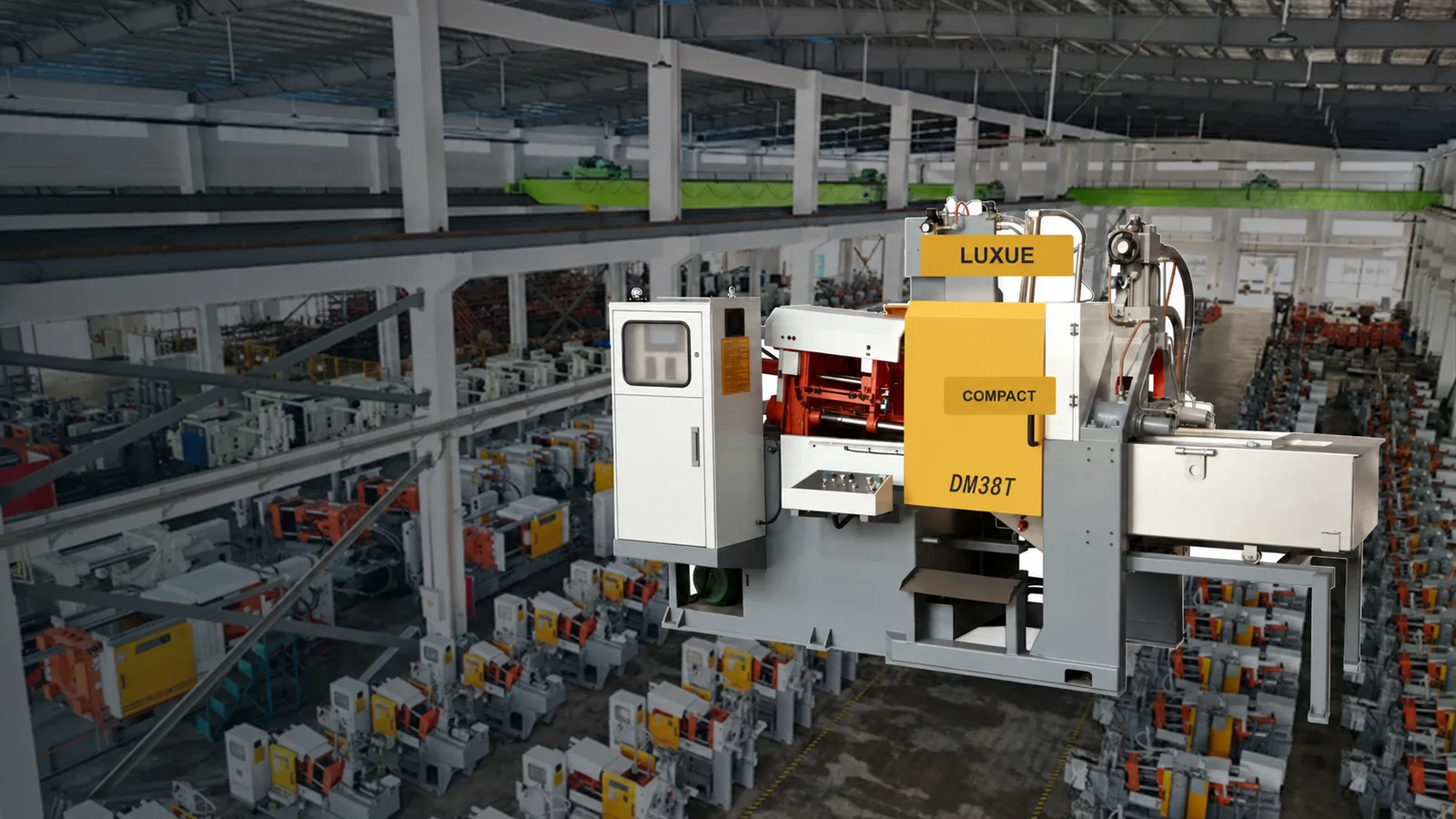
Model DM38T380 kNZinc alloys
38 Ton Zinc Hot Chamber Die Casting Machine
Review the DM38T only when its smaller 380 kN platform and tighter 300 x 280 mm tie-bar spacing still fit the projected area and die with margin.
View specifications →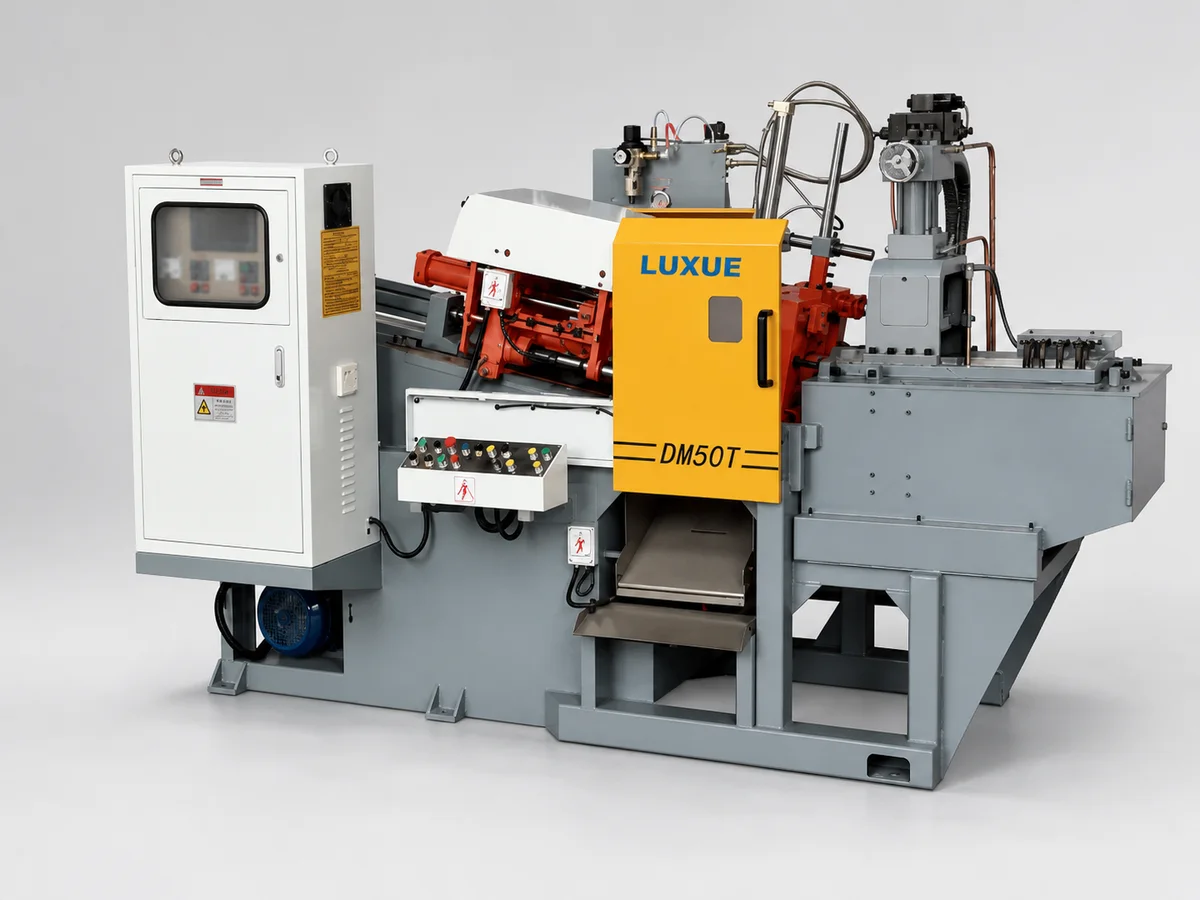
Model DM50T500 kNZinc alloys
50 Ton Zinc Hot Chamber Die Casting Machine
Compare the DM50T when 500 kN clamping force and 300 x 300 mm tie-bar spacing are sufficient; its listed shot weight matches the DM68T at 0.9 kg zinc.
View specifications →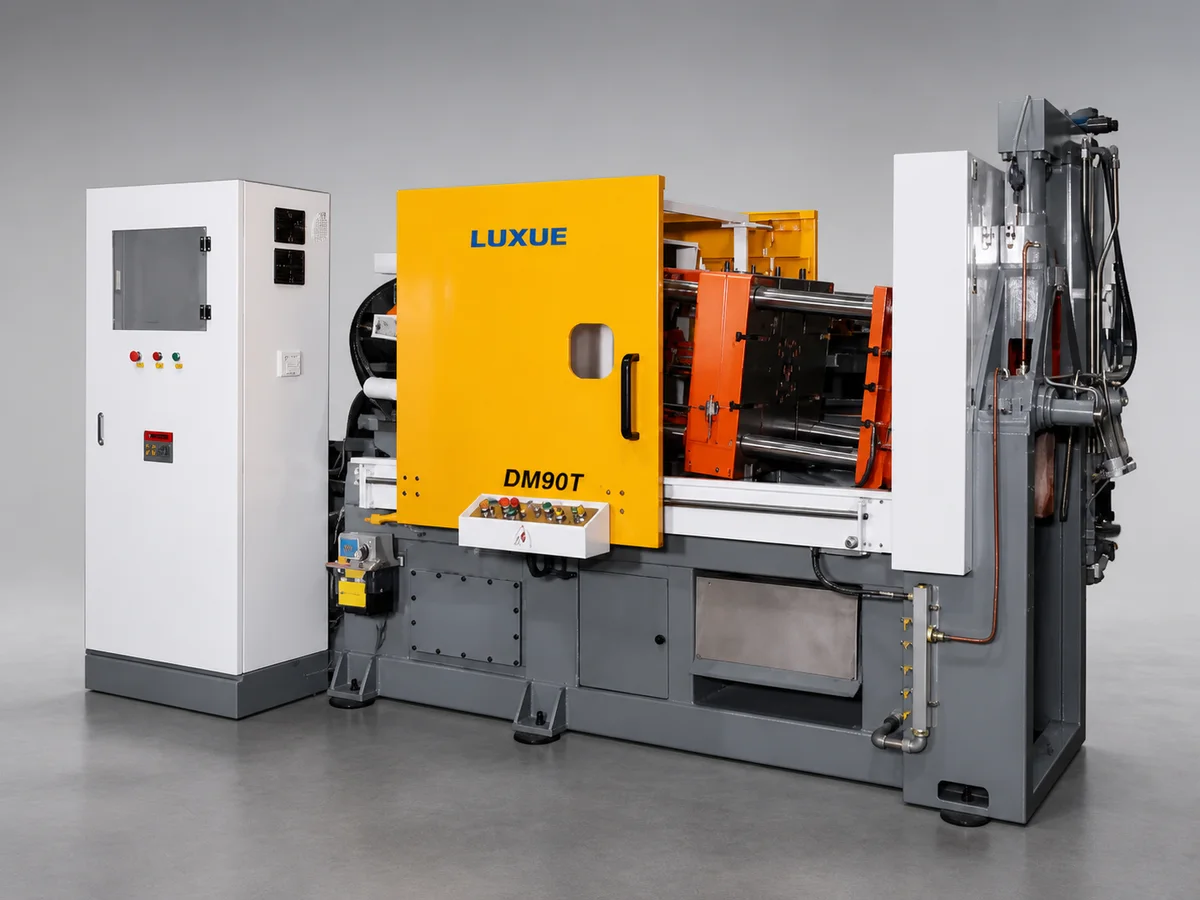
Model DM90T900 kNZinc alloys
90 Ton Zinc Hot Chamber Die Casting Machine
Move to the DM90T when the calculation needs 900 kN, the die needs 400 x 400 mm tie-bar spacing or 130-430 mm thickness, or the shot demand exceeds 0.9 kg.
View specifications →Compare all 38-168 ton zinc hot chamber die casting machine models
DM68T configuration inquiry
Send the die envelope and complete shot data
The fastest useful response confirms whether the wider DM68T platform solves the actual constraint and records the selected hot end, controls, interfaces, and supply boundary.
- RequiredPart drawing, alloy, complete shot weight, projected area
- RequiredDie dimensions, weight, cavities, mounting and ejection
- TargetCycle, annual volume, shifts and quality expectations
- PlantVoltage, automation, safety, destination and documents