90 mmplunger diameter
- Aluminum shot
- 9.1 kg
- Magnesium shot
- 5.5 kg
- Intensification
- 154 MPa
- Casting area
- 580 cm²
Highest listed intensification pressure and the lowest complete-shot allowance.

DC880T / Heavy cold chamber production-cell review
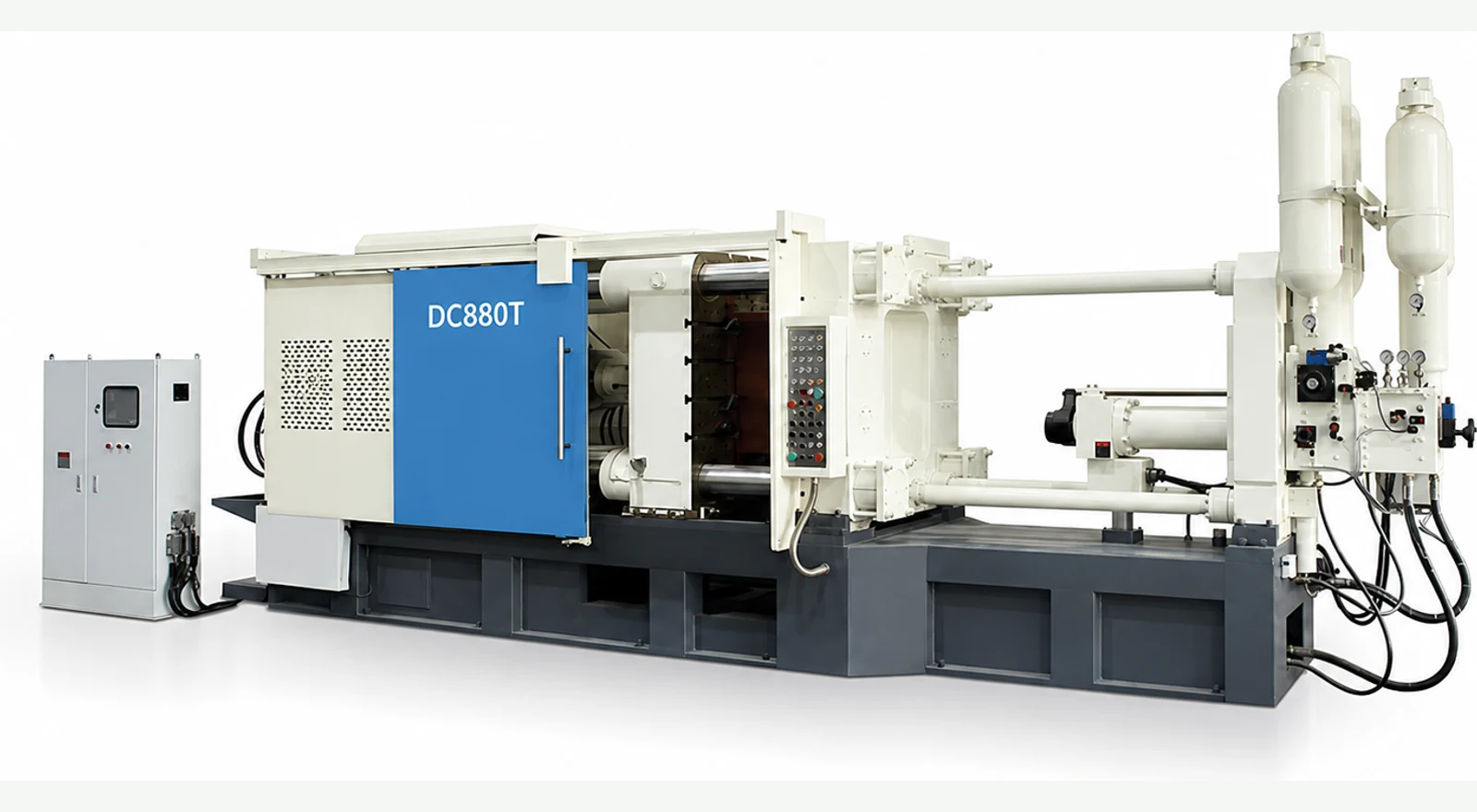
The DC880T combines a published 8,800 kN clamp, a 960 x 960 mm tie-bar opening, and three pressure-capacity packages for larger aluminum and magnesium projects. Approve it only when casting, die, process, automation, plant, and acceptance data support one documented production-cell decision.
Published DC880T data reviewed August 10, 2026 by Cathy, Director. Final approved drawings and signed technical documents take precedence.
Project qualification board
Proceed when calculated clamp demand stays within 8,800 kN with the agreed margin, complete shot and pressure fit one package, the die clears every static and moving boundary, and the entire cell can be installed, accepted, operated, and maintained at the destination plant.
Total cavities, runners, overflows, and pressure-exposed slides. Record alloy, cavity-pressure basis, quality risk, and operating margin.
Include net castings, runners, biscuit, overflows, and process allowance. Check mass and required intensification pressure together.
Verify width, height, 400-950 mm thickness, weight, mounting, opening, ejection, slides, core pulls, cooling, vacuum, and lifting.
Define fill profile, pressure, thermal control, vacuum, spray, traceability, inspection, reject rules, sample conditions, and capability evidence.
Freeze furnace, dosing, extraction, trim, guarding, utilities, floor, access, service zones, safety, documents, and acceptance ownership.
Pressure-capacity matrix
Each DC880T package links metal allowance, intensification pressure, and published casting area. The correct choice satisfies complete shot and the required process pressure with an agreed margin; a larger diameter increases capacity while reducing the listed pressure.
This published value is not an unconditional part-size approval. Geometry, cavity pressure, pressure-exposed slides, alloy, quality target, and margin determine actual allowable projected area.
Highest listed intensification pressure and the lowest complete-shot allowance.
Middle package for a balanced pressure and metal-capacity requirement.
Largest listed metal allowance and the lowest listed intensification pressure.
Controlled model record
These published values support initial model comparison and RFQ preparation. Confirm datums, tolerances, component brands, interfaces, options, utilities, floor plan, and installation dimensions in the approved technical package.
Technical reference: current published DC880T product data, reviewed August 10, 2026 by Cathy, Director | *Confirm the injection-position datum and usable range in the project drawing | Final signed technical agreement takes precedence.
Published manufacturer reference: ShiMi DC880T Standard Cold Chamber Die Casting Machine. Use this public record to cross-check the web summary; approved supplier drawings and the signed technical agreement govern the final configuration.
System evidence review
These official system references have been cleaned of Chinese and brand text. They show component families and service zones, not a guarantee that every visible make, quantity, or arrangement is included in the final DC880T quotation.
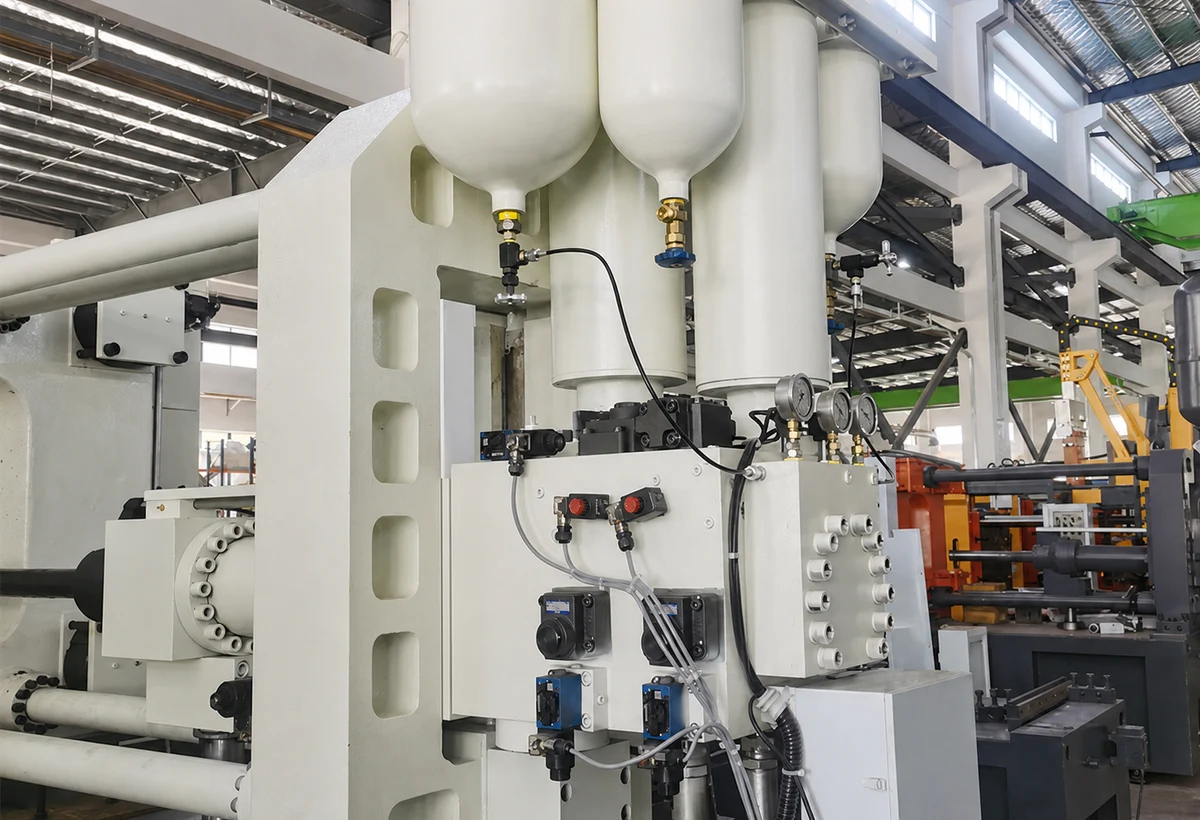
The published system describes separate high-speed and intensification accumulators. Define the selected shot package, safe discharge, pressure verification, gauge accuracy, inspection access, acceptance records, and critical spares in the signed technical agreement.
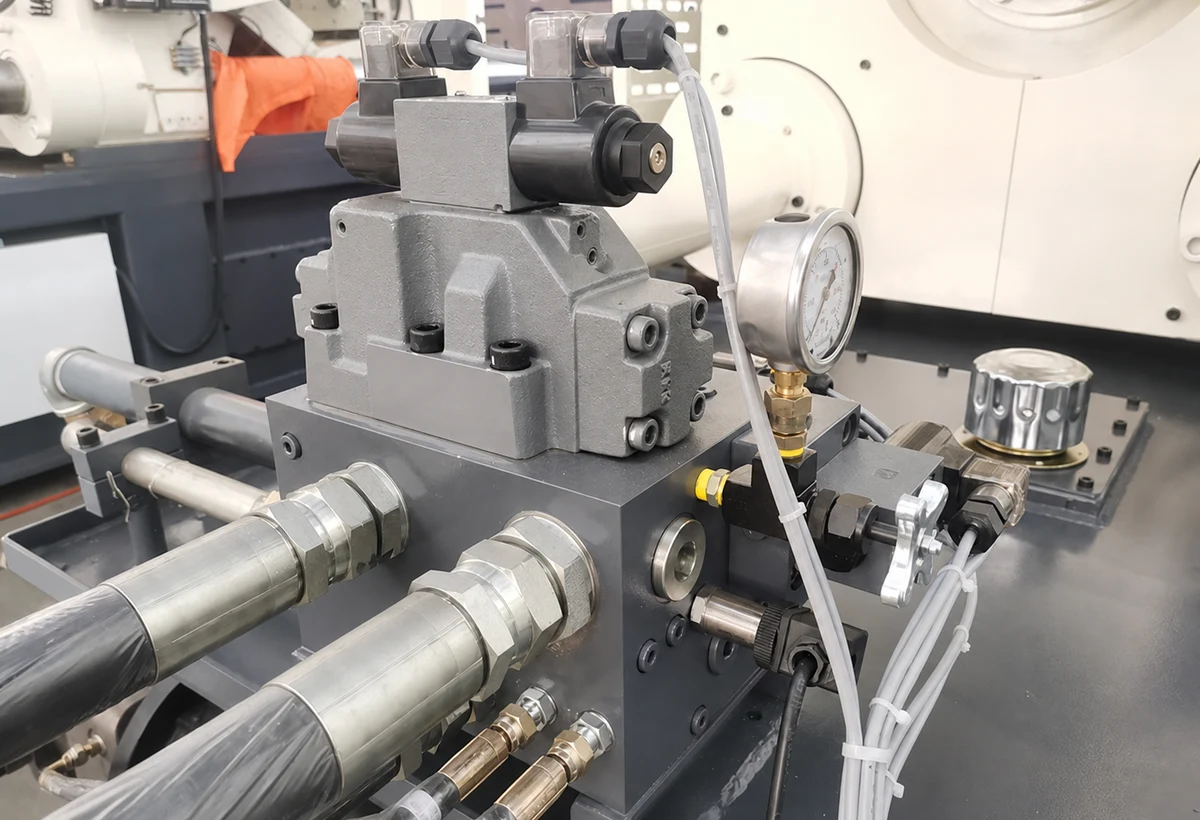
Record the quoted hydraulic component makes, filtration and oil specification, operating temperature, diagnostic points, core-pull groups, hose and seal spares, maintenance access, and delivered troubleshooting documentation.
Production-cell architecture
A comparable quotation identifies the owner, performance boundary, signals, utilities, documents, acceptance evidence, and exclusions at every transition. The base machine is one system inside the cell.
Alloy, furnace capacity and energy, temperature control, transfer height, dosing or ladling, loss assumptions, level signals, replenishment, and safety.
Cooling circuits, die temperature, vacuum, spray, release agent, core pulls, clamps, ejector interface, leak testing, and changeover tooling.
Robot reach, gripper, part confirmation, quench, conveyors, trim, scrap, marking, inspection, reject routing, buffering, and cycle recovery.
Guarding, interlocks, emergency zones, I/O, recipes, user levels, alarms, process curves, trace files, network boundary, backups, and remote support.
FAT and SAT, sample conditions, open actions, packing, lifting, installation, commissioning, training, warranty, service response, and critical spares.
45 ton site-readiness review
The published 45 ton machine weight and 9.7 m length require a controlled route from shipping point to final foundation. Peripherals, molten-metal systems, guarding, platforms, piping, and maintenance zones increase the installed scope beyond the bare-machine envelope.
Confirm packing dimensions and weights, port and inland limits, doorway and aisle clearances, floor transitions, unloading equipment, crane capacity and hook height, rigging, lifting points, center of gravity, and the party responsible for final positioning.
Review floor loading, pits, anchoring, leveling, vibration, drainage, oil-containment needs, die-change route, tie-bar and platen service, accumulator access, electrical-panel clearance, and safe escape paths against approved drawings.
State voltage, frequency, transformer and cable boundaries, connected and operating electrical demand, cooling-water flow and quality, compressed air, oil-temperature control, exhaust, furnace energy, network, and every connection location.
Define the applicable standard, risk-assessment responsibility, guard footprint, interlocked doors, platforms and stairs, lockout points, hot-metal zones, operator visibility, maintenance access, labels, language, validation records, and site permits.
Quote normalization and FAT
A lower price can reflect a different shot end, control system, hydraulic package, automation boundary, delivery term, test method, documentation package, or installation responsibility. Use one scope matrix for every bidder.
Selected plunger and sleeve, injection positions, controls, hydraulics, core pulls, cooling interfaces, guarding, lubrication, options, component makes, paint, and exclusions.
Furnace, dosing, spray, extraction, trim, conveyors, safety, utilities, foundations, platforms, piping, I/O, data, installation, and local work.
Safety checks, dry cycle, die protection, ejection, injection stages, pressure build, repeatability, recipes, alarms, sample conditions, interfaces, records, limits, and corrective-action rules.
Incoterm, packing, insurance, shipment, unloading, commissioning, training, translated documents, software backups, recommended and included spares, warranty, service response, and payment milestones.
DC880T decision FAQ
Use these answers as a screening framework, then place the project-specific values, owners, drawings, tolerances, and acceptance evidence into the signed technical agreement.
The DC880T is an initial candidate for larger aluminum or magnesium projects whose projected-area calculation, complete shot, die envelope, process pressure, and production-cell interfaces fit the published 8,800 kN clamp and a confirmed 90, 100, or 110 mm plunger package. The 880 ton name alone does not approve a part or die.
Published data lists 8,800 kN clamping force, 760 mm clamping stroke, 320 kN ejecting force, 180 mm ejection stroke, 400-950 mm die thickness, 1,450 x 1,415 mm platens, 960 x 960 mm tie-bar spacing, 665 kN injection force, 780 mm injection stroke, a 45 kW motor, and an approximate machine weight of 45 tons.
Match complete metal demand and required intensification pressure together. Published aluminum capacities increase from 9.1 to 12.0 kg as plunger diameter rises, while listed intensification pressure decreases from 154 to 98 MPa. The largest plunger is therefore not automatically the safest choice.
Calculate the projected area of every cavity, runner, overflow, and pressure-exposed slide, multiply it by the documented cavity-pressure assumption, and apply the agreed operating margin. Compare the result with 8,800 kN separately from complete shot, the published 2,350 cm² maximum casting area, and die fit.
Compare the DC550T when it clears the same project with margin and a smaller installed scope. Review the DC1000T or DC1300T when clamp demand, complete shot, the 960 x 960 mm tie-bar opening, 950 mm maximum die thickness, die handling, automation reach, or service clearance crosses a documented DC880T limit.
Send the alloy, casting and runner drawings, projected area, cavity-pressure basis, complete shot, cavities, die dimensions and weight, motion and services, quality target, cycle and volume, furnace, dosing, spray, extraction and downstream plan, factory layout, utilities, safety standard, destination, documentation, training, and acceptance requirements.
DC880T production-cell inquiry
The more complete the input, the faster the response can identify a defensible model, shot package, interface list, acceptance path, commercial scope, and unresolved risks.
Casting and process Alloy, drawings, projected area, pressure basis, cavities, net and complete shot, fill and quality requirements.
Die and services Size, thickness, weight, mounting, movement, ejection, slides, core pulls, cooling, vacuum, lifting and changeover.
Cell and performance Cycle, volume, shifts, furnace, dosing, spray, extraction, trim, inspection, scrap, guarding and traceability.
Factory and delivery Layout, access, floor, utilities, safety, destination, FAT, documents, packing, installation, training and spares.