Motor and e-axle housings
Motor cases, end covers, e-axle housings, gearbox cases, pump bodies, and mounting structures.
- Program focus
- Bearing and seal datums, leak boundary, concentricity, cooling paths, machining stock, and handling.

Automotive program / application 01
Build the machine and cell specification from the casting, die, process window, quality plan, output duty, and plant interface—not from a vehicle-part label or nominal tonnage.
Technical content reviewed August 10, 2026 by Cathy, Director. Final suitability depends on the approved casting data, calculations, process trials, cell scope, acceptance evidence, and written quotation.
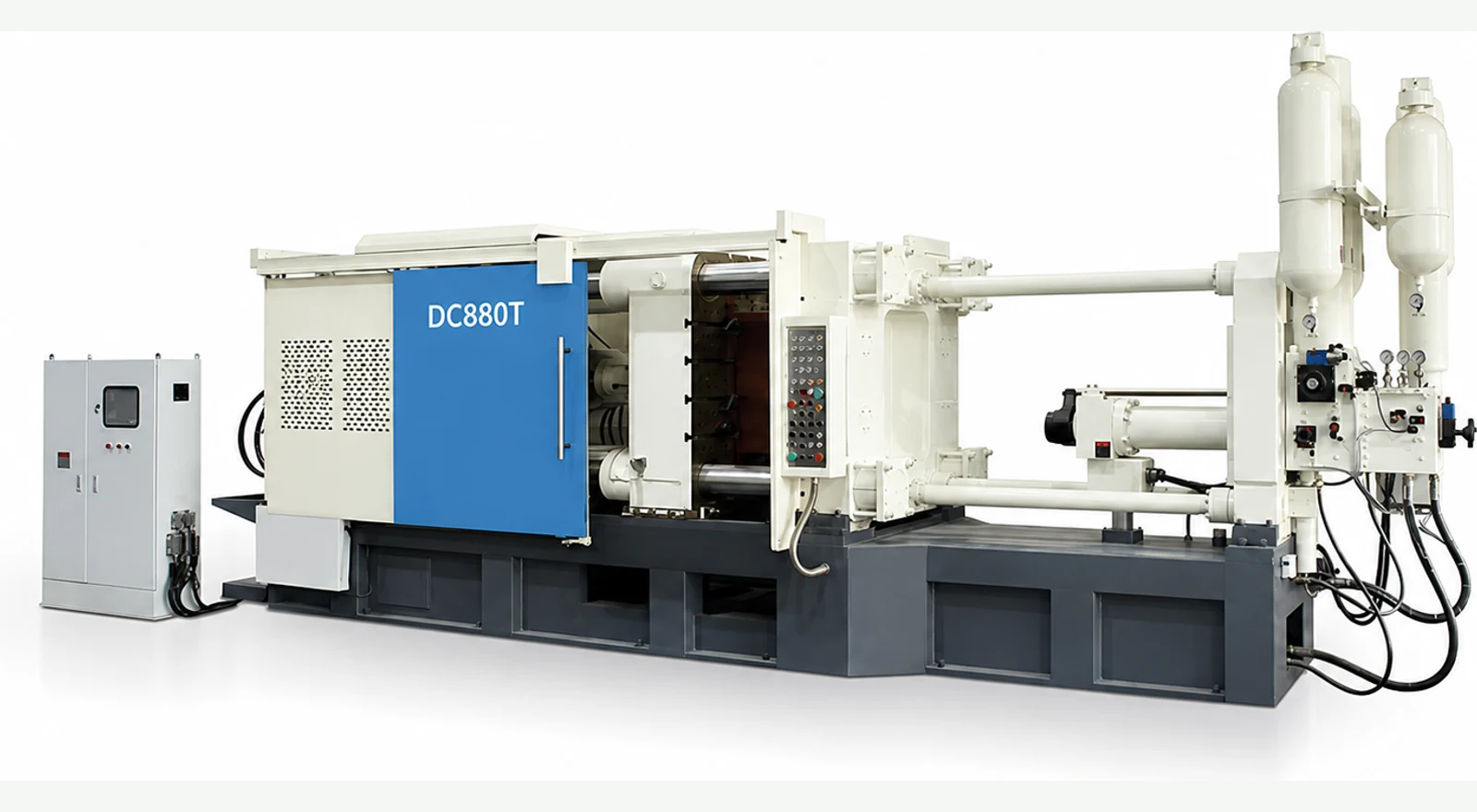
Use a cold chamber die casting machine for most aluminum or magnesium automotive housings and larger EV components; use a hot chamber machine only for suitable compact zinc parts. Select the model after checking projected area and pressure, complete shot demand, die envelope, injection requirement, quality evidence, automation, and utilities.
Compare the routesComponent map / program families
Two parts in the same vehicle can require different alloys, chamber processes, machine sizes, inspection plans, and cells. The component family identifies the questions; the approved data selects the equipment.
Motor cases, end covers, e-axle housings, gearbox cases, pump bodies, and mounting structures.
Inverter, controller, on-board charger, DC/DC, junction, sensor, and electrical enclosure programs.
Selected battery enclosures, covers, cooling-system housings, thermal plates, brackets, and protected interfaces.
Mounts, nodes, cross-members, brackets, subframes, and larger integrated casting concepts.
Locks, handles, shift parts, seat and window mechanisms, key components, trim hardware, and sensor housings.
Transmission cases, engine and pump housings, covers, steering parts, brackets, and service components.
Process route / alloy first
Automotive is not one process category. Aluminum and many magnesium programs normally start with cold chamber screening. Selected compact zinc mechanisms and decorative or functional hardware can use the productive hot chamber route.
Confirm the alloy specification, operating temperature, mechanical and finishing requirements before selecting either process. A part description alone is not a process specification.
Review cold versus hot chamber fundamentals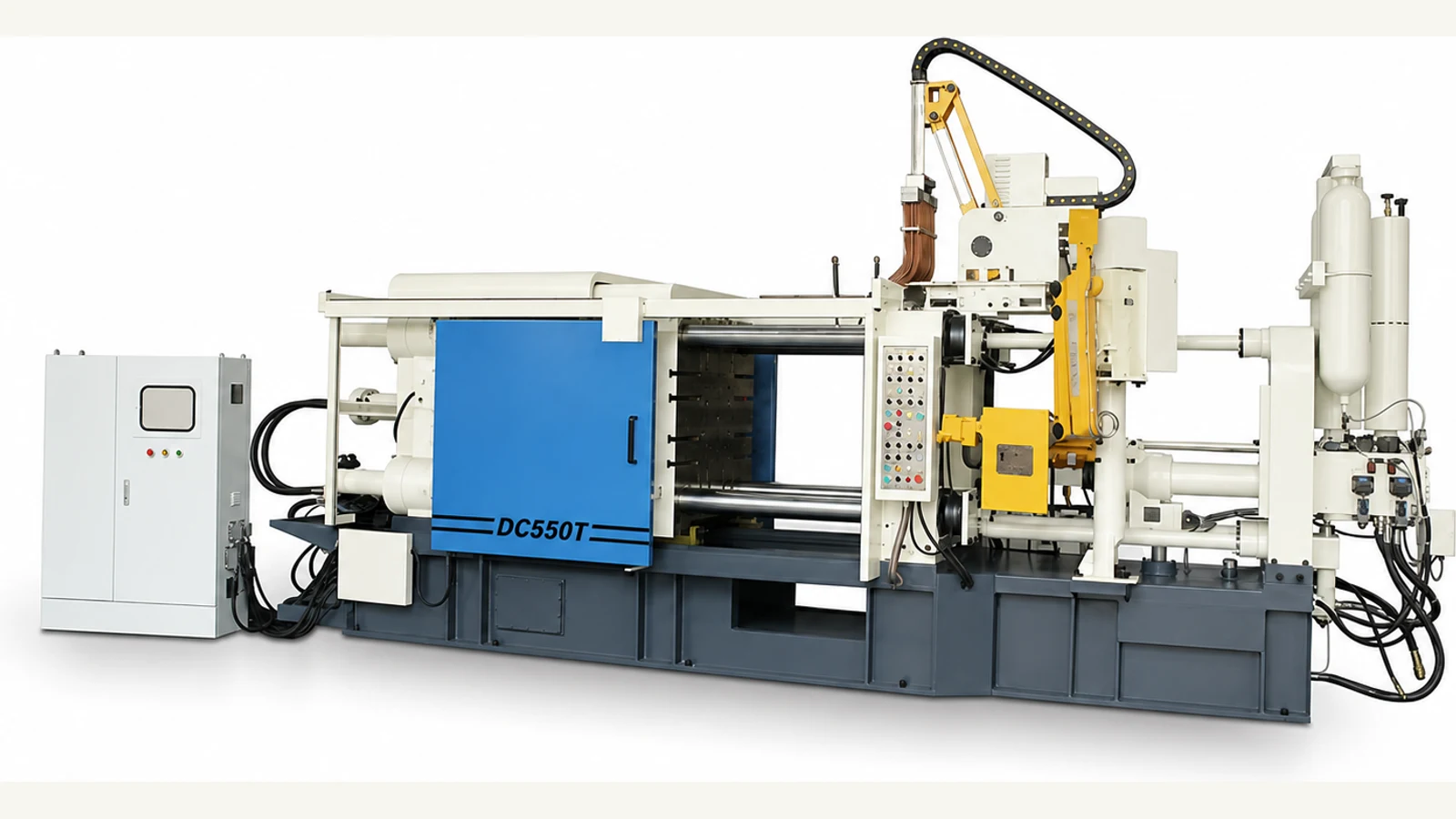
Initial route for motor, gearbox, power-electronics, pump, thermal, chassis, and larger housing programs after the die, shot, quality, and cell are verified.
Compare 180–3000 ton listed models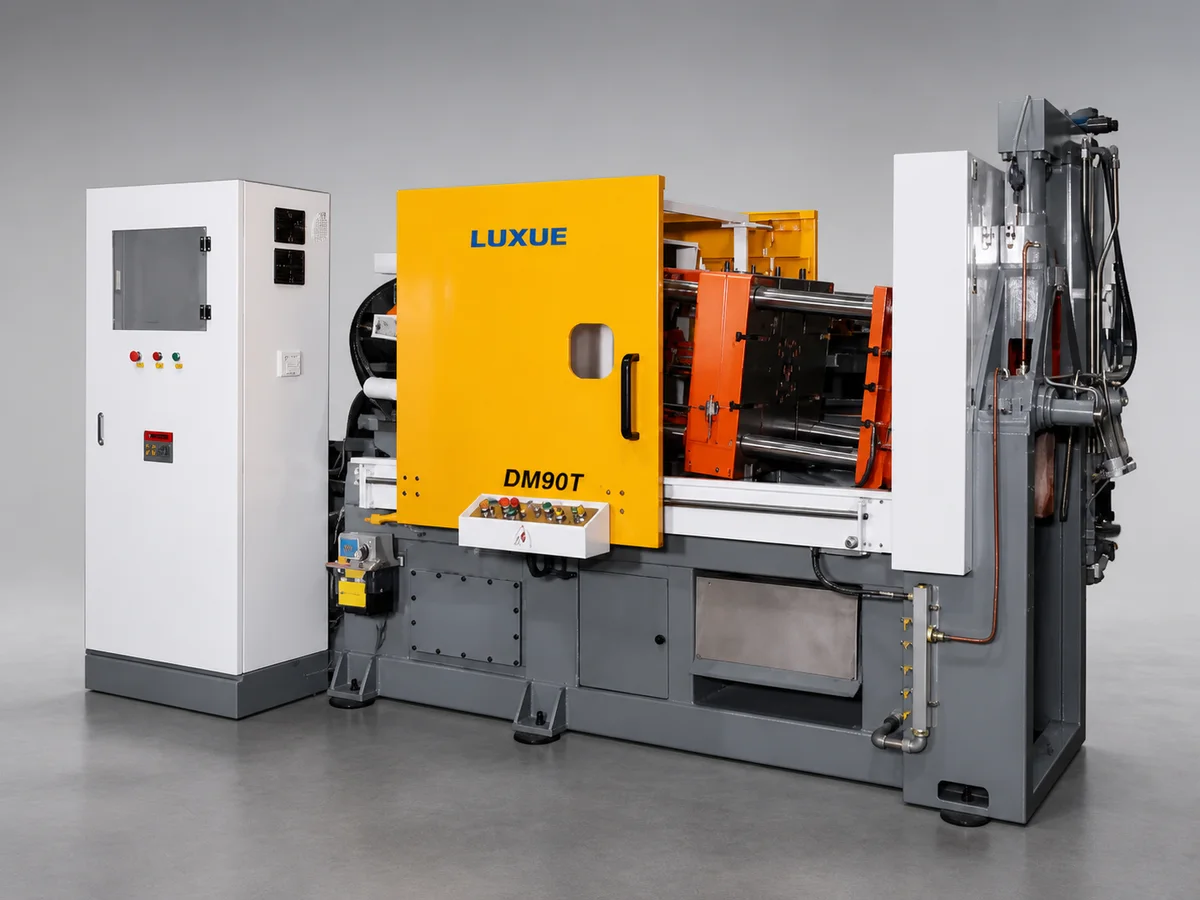
Initial route for suitable locks, handles, trim hardware, small mechanisms, key parts, and sensor housings after alloy, die, finish, and volume review.
Compare 38–168 ton listed modelsAutomotive RFQ / six release gates
Use one revision-controlled basis for every supplier. Complete known fields, label assumptions and open points, then require the quotation to answer each gate with included scope, exclusions, and evidence.
Freeze the drawing revision, alloy specification, casting weight, projected area, walls, inserts, machining, finish, joining, and service duty.
Record cavities, runner and overflow weight, die dimensions and weight, slides, shot profile, plunger option, pressure basis, and fill risks.
Define critical and significant characteristics, porosity limits, leak test, X-ray or CT scope, destructive tests, samples, capability, and traceability.
Allocate furnace and dosing, vacuum, spray, extraction, cooling, trim, inspection, marking, conveyors, guarding, data, and recovery logic.
Confirm voltage, water, air, foundation, access route, crane coverage, maintenance clearances, local standard, network, exhaust, and safety boundary.
Normalize trials, acceptance material, run duration, documents, training, spares, packing, Incoterm, installation, support, warranty, and exclusions.
Machine selection / calculation basis
Clamping force is screened from total projected area and the approved cavity-pressure basis. Shot capacity must cover the casting, runner, overflow, biscuit, and process allowance within the selected plunger package. The die must also clear tie bars, platen, thickness, opening, ejector movement, weight, and service access.
For automotive work, the limiting condition may be injection response, vacuum, die thermal balance, automation reach, inspection time, changeover, utility duty, or data control—not nominal tonnage. Record the actual limit and margin instead of adding an arbitrary tonnage reserve.
Open the machine RFQ checklistProjected area × approved pressure basis + documented margin
Complete metal demand against the selected shot-end package
Envelope, movement, weight, service and handling clearance
Fill, intensification, vacuum, thermal balance and repeatability
Metal to accepted part, including recovery and traceability
Shortlist map / not a sizing promise
The bands below are navigation aids. No component family is assigned to a model until its calculated clamp, complete shot, die, process, cell, and site requirements have been checked.
Initial review zone for smaller housings, brackets, covers, and conventional automotive components when the complete project fits the listed machine limits.
Check compact cold chamber modelsInitial review zone for larger housings and integrated components. Validate shot-end options, die access, automation, quality controls, and utility duty in detail.
Check medium cold chamber modelsLarge-machine programs require transport, foundation, utilities, die service, peripherals, plant integration, testing, safety, and site acceptance to be planned as one project.
Check large cold chamber modelsStructural, pressure-tight, heat-treated, welded, or safety-related castings require their own customer-approved material, process, inspection, traceability, and validation plan.
Quality and acceptance / buyer control
“Automotive quality” is not an acceptance criterion. Convert the part requirements into measurable machine, process, cell, and casting evidence. If PPAP, capability studies, traceability, specific inspection equipment, customer forms, or a production trial are required, state the exact deliverable, sample basis, responsible party, and approval route.
Freeze which party supplies process material, dies, gauges, fixtures, test equipment, programs, recipes, destructive testing, reports, and accepted samples. Also define how alarms, parameter changes, rejects, rework, and batch or cavity identity will be recorded.
External technical context
Ryobi identifies EV die-cast examples including e-axle, motor, on-board charger, gear, and battery cases. The International Zinc Association documents automotive uses for compact zinc components and explains the hot chamber route used for most zinc die castings. These sources support application screening, not a guarantee that a specific casting will meet its requirements on a listed machine.
Automotive and EV die casting FAQ
Use these answers for initial screening. The approved calculation, technical specification, quotation, trials, and acceptance records remain controlling.
Automotive aluminum and many magnesium programs are normally screened on a cold chamber machine. The model cannot be selected from the application name or casting weight alone. Calculate clamp demand from total projected area and the approved cavity-pressure basis, then verify complete shot demand, available shot package, die envelope, injection duty, automation, quality plan, and plant interface.
No. Part weight influences shot capacity, but clamping force is driven mainly by total projected area and the pressure basis. A defensible selection checks clamping, total shot, die fit, opening and ejector movement, injection performance, handling access, utilities, and the complete production cell together.
Send the current drawing and alloy, casting and runner weight, projected area, critical walls, cavities, die size and weight, machining datums, seal and leak requirements, annual volume, target cycle, process assumptions, and plant conditions. Identify bearing bores, connector details, cooling paths, flatness, porosity-sensitive zones, and inspection requirements.
Vacuum is a project decision based on geometry, fill and venting strategy, required internal quality, mechanical properties, leak performance, heat treatment, joining, and the approved process window. Specify the target vacuum performance, interfaces, monitoring, alarms, maintenance, and acceptance method rather than listing vacuum as an undefined option.
Possibly, but each die must clear the same machine envelope and process limits. Compare tie-bar opening, platen, die thickness, opening stroke, ejector movement, shot package, injection duty, die-service access, automation interfaces, recipes, changeover, utilities, and quality controls for every planned program. The most demanding verified condition controls the shared specification.
Yes, for selected compact zinc parts such as locks, handles, trim hardware, mechanisms, key components, and sensor housings. Confirm the actual zinc alloy, projected area, total shot, die envelope, hot-end arrangement, finish, insert or secondary-operation needs, and output target before choosing a hot chamber model.
Only after a project-specific engineering review. Structural and safety-related programs require customer-controlled material, mechanical-property, crash, joining, heat-treatment, traceability, inspection, and validation requirements. The machine and cell quotation must state the calculation basis, controlled options, trials, acceptance evidence, responsible parties, and exclusions.
Provide one controlled RFQ package: drawing revision, alloy, volumes, part and runner data, projected area, die information, pressure and shot assumptions, quality plan, automation scope, utilities, standards, delivery site, acceptance plan, documentation, spares, service, and commercial terms. Mark unknowns instead of allowing each supplier to make a different hidden assumption.
Automotive program request
A useful first review can identify missing information as well as candidate machine families. Mark unknowns instead of guessing.
Drawing, material, casting and runner weight, projected area, walls, quality, machining, sealing, finish.
Cavities, dimensions, weight, slides, pressure basis, shot profile, vacuum, cooling, trim, inspection.
Annual volume, cycle, shifts, peripherals, automation, traceability, changeover, scrap and recovery.
Utilities, route, standards, destination, timing, trials, acceptance, documents, training and support.