
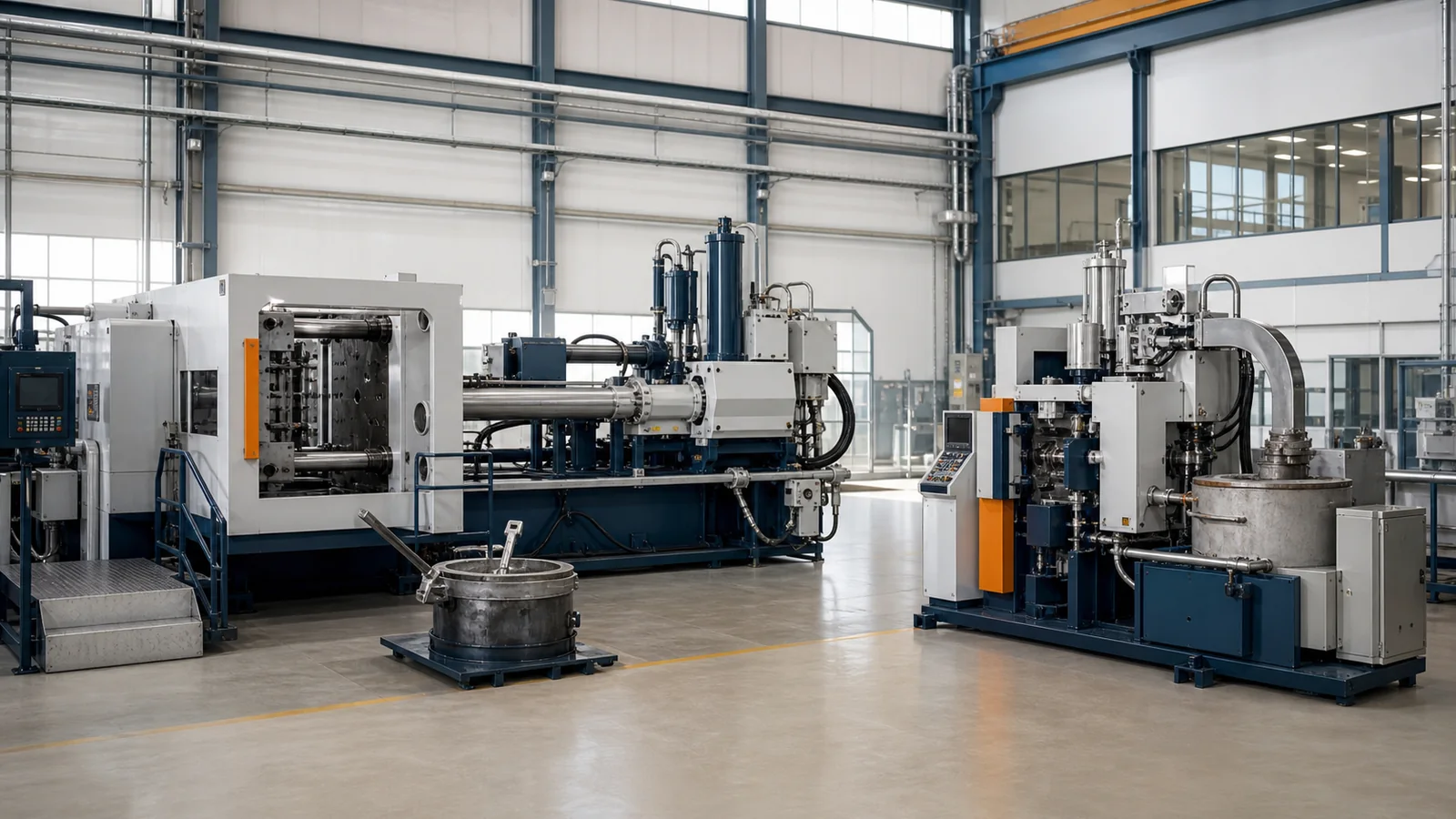
Buyer decision guide / machine family
Cold chamber vs hot chamber die casting machines: Which should buyers choose?
Start with the actual alloy and metal-delivery route, then confirm the casting, die, output, quality, automation, and plant boundary.
A buyer comparing cold chamber and hot chamber machines is not choosing between a basic and an advanced design. The two systems handle molten metal differently, so the correct route begins with alloy compatibility and continues through the complete production cell.
Cold chamber machines are the usual starting point for aluminum, copper, and some magnesium projects because metal is transferred into a separate shot sleeve. Hot chamber machines are commonly selected for compatible zinc and some magnesium alloys because the injection mechanism is connected to the molten-metal bath.
When I receive an inquiry that names only tonnage, my first clarification is the alloy, not the machine model. Once the material route is clear, I can ask for the drawing, shot demand, die envelope, production target, and scope needed for a useful model review.
Decision point 01 / first route
What is the short rule for choosing cold or hot chamber?
Choose the chamber family from the exact alloy and its permitted metal-delivery process. Do not choose from nominal tonnage, part weight, cycle-time claims, or machine price before alloy compatibility is confirmed.
External metal transfer
Molten metal is prepared outside the injection unit and delivered into a horizontal shot sleeve for each cycle. This is the normal review route for aluminum and other alloys that are unsuitable for an immersed hot chamber injection system.
Review cold chamber machinesIntegrated metal delivery
The injection mechanism is immersed in or connected directly to the molten-metal bath. This shortens the metal path and is commonly used for compatible zinc work and selected lower-melting alloys.
Review hot chamber machinesThe North American Die Casting Association describes the same process boundary: cold chamber equipment receives metal from an external furnace, while the hot chamber injection mechanism is submerged in the molten bath. NADCA also notes that alloy compatibility limits the hot chamber route. See its die casting process FAQ.
Decision point 02 / material
Why does the alloy come before the machine?
The molten alloy contacts different parts of the injection system in each process. Its casting temperature and reaction with the immersed hardware determine whether the hot chamber route is practical or whether a separate cold chamber shot sleeve is required.
Aluminum is normally reviewed with cold chamber equipment. Zinc alloys are commonly reviewed with hot chamber equipment, but the word "zinc" is not enough for final confirmation. Some zinc-aluminum compositions require a different process route. Magnesium also needs alloy-specific review rather than a blanket chamber assumption.
NADCA's alloy selection guidance connects alloy choice with machine size, production rate, die maintenance, and process cost. Its zinc-aluminum guidance also shows why buyers should state the full alloy designation instead of relying only on the material family.
Decision point 03 / metal path
How does the metal-delivery path change the production cell?
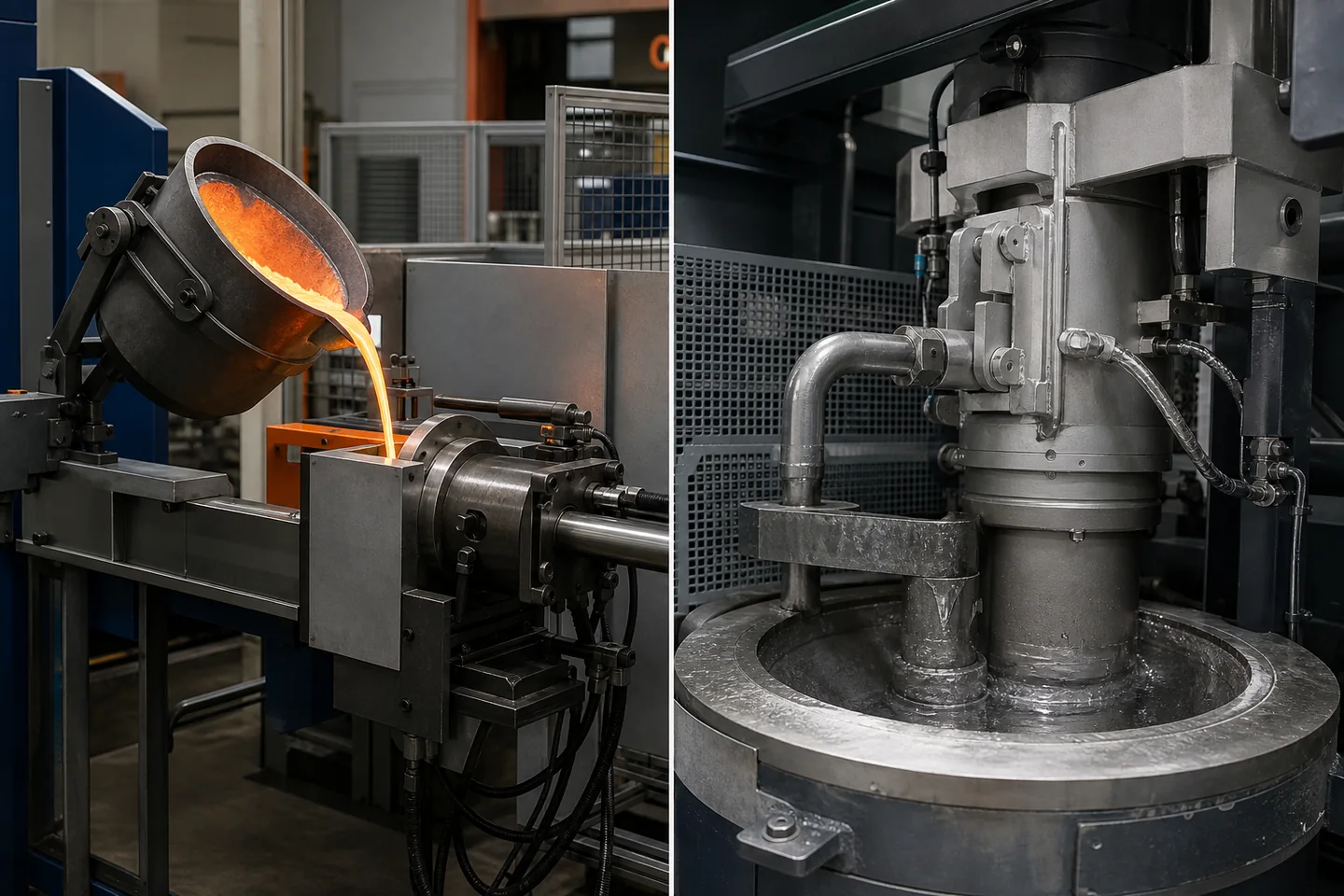
Cold chamber production adds a transfer step between the furnace and shot sleeve. Hot chamber production integrates the holding bath with the injection mechanism. That difference changes dosing equipment, cycle sequence, thermal control, maintenance items, layout, guarding, and quotation scope.
In a cold chamber cycle, a manual ladle, automatic ladler, dosing furnace, or another approved transfer method delivers a measured charge to the shot sleeve. The plunger then drives the metal into the locked die. NADCA's cold chamber process description identifies the external furnace and separate transfer step as defining features.
In a hot chamber cycle, the injection cylinder fills from the attached molten-metal bath. The plunger forces metal through the gooseneck and nozzle into the die. The NADCA hot chamber process description explains this shorter, integrated route.
When I help clarify quotation scope, I do not treat the machine photograph as an equipment list. For a cold chamber project I ask who supplies melting, holding, dosing or ladling. For a hot chamber project I ask what furnace, gooseneck, nozzle, heater, temperature control, and metal-level provisions are included.
Decision point 04 / side-by-side review
What changes for the buyer in a cold versus hot chamber project?
The most useful comparison covers material route, metal delivery, injection hardware, production sequence, maintenance exposure, peripheral equipment, model range, and the evidence that must appear in the quotation.
| Buyer check | Cold chamber | Hot chamber |
|---|---|---|
| Typical starting alloys | Aluminum, copper, and selected magnesium or zinc-aluminum alloys, subject to exact alloy review. | Compatible zinc alloys and selected magnesium or other lower-melting alloys, subject to exact alloy review. |
| Metal delivery | A measured charge is transferred from external melting or holding equipment into the shot sleeve. | The injection unit fills from the attached bath and sends metal through the gooseneck and nozzle. |
| Cell equipment | Furnace, transfer or dosing equipment, ladler interfaces, shot sleeve, plunger tip, spraying, extraction, and trim scope. | Integrated or attached furnace, gooseneck, nozzle, heaters, plunger, metal-level control, spraying, extraction, and trim scope. |
| Cycle discussion | Includes metal transfer and shot-sleeve thermal conditions. Target cycle must be checked with the casting, die, and automation. | The integrated metal path can support shorter cycles for suitable work, but the casting, die, and automation still set the achievable duty. |
| Maintenance focus | Shot sleeve, plunger tip, lubrication, dosing repeatability, furnace interfaces, hydraulics, cooling, and guarding. | Gooseneck, nozzle, plunger, heaters, furnace condition, metal level, temperature control, hydraulics, and guarding. |
| Selection evidence | Alloy, total projected area, complete aluminum or magnesium shot, die envelope, injection package, cell layout, and utility schedule. | Alloy, total projected area, complete zinc shot, die envelope, hot-end package, furnace basis, cell layout, and utility schedule. |
The table identifies the starting route, not a guaranteed result. Production rate, quality, energy use, maintenance cost, and casting performance depend on the final alloy, machine configuration, tooling, process window, automation, utilities, and operating practice.
Decision point 05 / model fit
What still determines machine size after the chamber is chosen?
Chamber type selects the machine family. It does not select tonnage or model. Clamp demand, complete shot volume, injection duty, die dimensions, opening and ejection movement, production target, quality requirements, automation, and plant limits must pass together.
Clamp
Total projected area and the approved cavity-pressure basis determine the force trying to open the die.
Shot
Use complete metal per cycle, not net part weight alone. Include cavities, runners, overflows, biscuit, and process allowance.
Die
Check tie-bar spacing, platen size, mold thickness, opening stroke, ejector travel, slides, weight, lifting, and service access.
Duty
Target output, shifts, cycle basis, changeovers, monitoring, vacuum, thermal control, extraction, and downstream handling affect the configuration.
When a buyer asks me to compare one cold chamber model with one hot chamber model by tonnage alone, I separate the questions. First we confirm whether both machines are even valid for the alloy. Then the responsible technical review can check each candidate against the same casting and die data.
The first article in this series provides the full die casting machine RFQ checklist for gathering those inputs.
Decision point 06 / commercial boundary
How should the quotation scope differ?
Ask both suppliers for a complete responsibility matrix, but make the equipment fields chamber-specific. A cold chamber quotation must define external metal preparation and transfer. A hot chamber quotation must define the integrated furnace and hot-end package.
Cold chamber scope questions
- Who supplies melting, holding, treatment, and dosing?
- Is transfer manual, automatic ladle, robot, or dosing furnace?
- Which shot sleeve and plunger package is selected?
- What lubrication, spraying, extraction, trim, and guarding are included?
- Which interfaces, utilities, commissioning work, and test material belong to each party?
Hot chamber scope questions
- Which furnace capacity and temperature-control package is included?
- Which gooseneck, nozzle, plunger, heater, and connection arrangement is selected?
- How are metal level and refill responsibility handled?
- What spraying, extraction, trim, guarding, and hot-end spares are included?
- Which interfaces, utilities, commissioning work, and test material belong to each party?
Decision point 07 / application route
Which machine family fits common purchasing situations?
Use the cases below as a routing screen. They are not model recommendations. Final approval requires the exact alloy, casting, die, process, cell, plant, safety, and acceptance data.
Begin with cold chamber
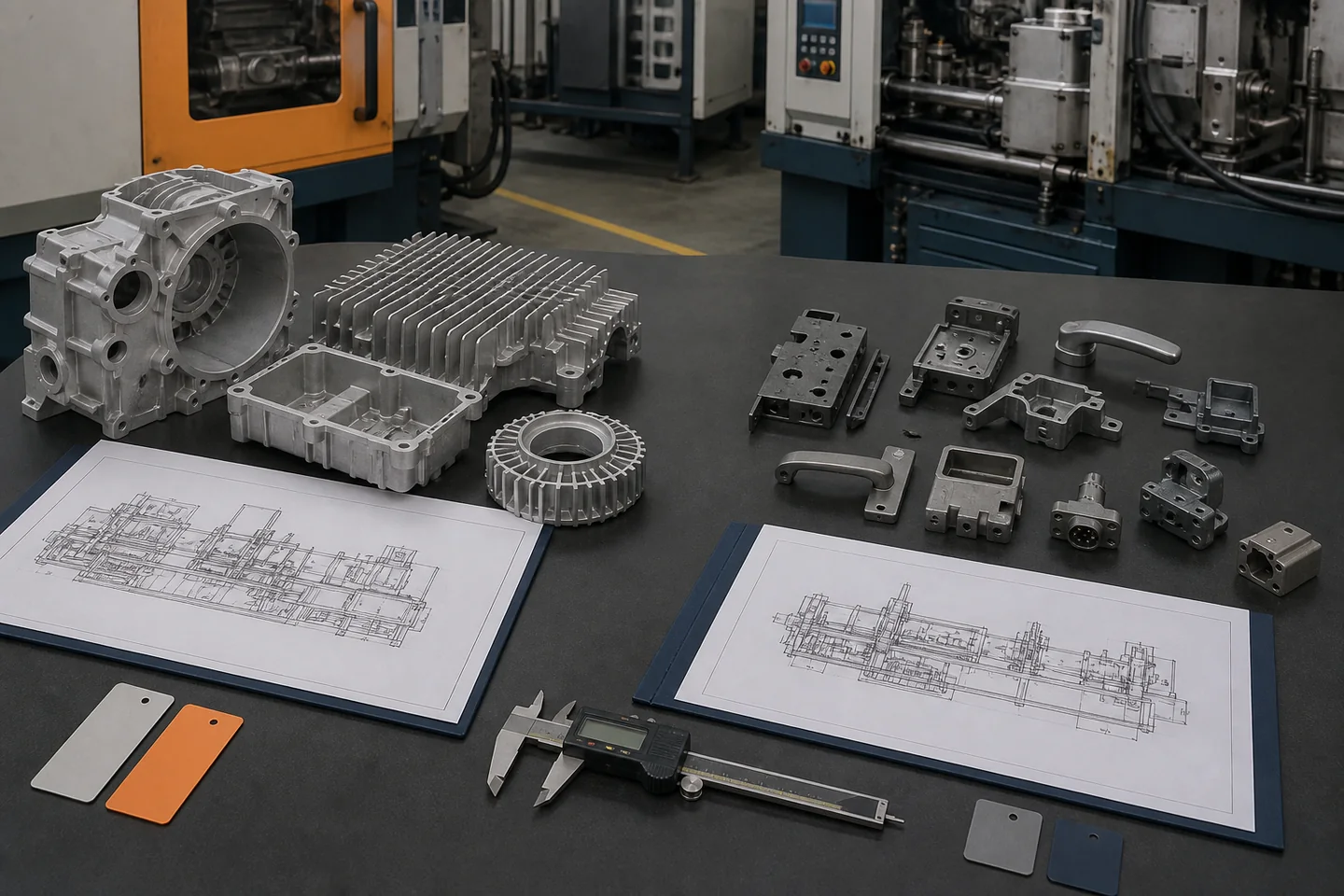
Motor housings, gearbox housings, heat sinks, structural housings, and similar aluminum work normally start with the cold chamber range. Confirm complete shot, projected area, die envelope, vacuum or monitoring needs, and the full cell.
Begin with hot chamber
Locks, handles, connectors, appliance hardware, and other compatible zinc parts commonly start with the hot chamber range. Confirm exact alloy, zinc shot, die fit, hot-end package, furnace, cycle target, and finishing requirements.
Hold the machine decision
If material engineering is still comparing aluminum, magnesium, zinc, or a ZA alloy, do not freeze the machine family. Record the candidate alloys and ask process specialists to confirm the permitted route for each one.
Audit the current interface
For an existing die, relocation, or replacement machine, provide the current machine record, die dimensions, injection position, shot-end details, utilities, automation interfaces, process data, and known problems. Do not assume nominal tonnage makes the new machine interchangeable.
Buyer questions / concise answers
Frequently asked questions about cold and hot chamber machines
Is hot chamber die casting always faster?
The integrated metal path can support shorter cycles for suitable alloys and parts, but no cycle time should be accepted from chamber type alone. Casting mass, wall sections, die thermal balance, solidification, spraying, extraction, trim, automation, quality checks, and operating conditions all affect the result.
Can aluminum run in a hot chamber machine?
Conventional aluminum die casting normally uses the cold chamber process because the alloy and casting temperature are unsuitable for the immersed hot chamber injection hardware. Confirm unusual materials or processes with qualified technical specialists rather than applying a general website statement as approval.
Is every zinc alloy suitable for hot chamber production?
No. State the exact alloy. Common compatible zinc alloys often use hot chamber equipment, while some zinc-aluminum compositions require cold chamber processing. The alloy specification must control the decision.
Does machine tonnage mean the same thing in both families?
Nominal clamping force still describes the clamp capacity, but equal tonnage does not make two machines interchangeable. Shot systems, die envelopes, injection performance, metal delivery, furnaces, controls, peripherals, and operating duties can be different.
What should I send for an initial recommendation?
Send the alloy, controlled drawing, net casting and complete shot estimates, total projected area, die dimensions, target output, quality-critical requirements, planned automation, site utilities, destination, and required supply scope. Mark estimates and unknowns clearly.
Conclusion: Which chamber should the project enter?
Choose the machine family from the verified alloy and permitted metal-delivery route. After that, use the complete die casting machine range to compare the available model window, then treat clamp force, shot capacity, die fit, cycle, automation, utilities, maintenance, and quotation scope as separate checks. A chamber decision is the start of model selection, not the finish.
For an initial review, I would rather receive an exact alloy with incomplete die data than a confident machine model with no material basis. The first gives us a valid route and a list of open questions. The second can send the entire discussion in the wrong direction.
Send your alloy and casting data